

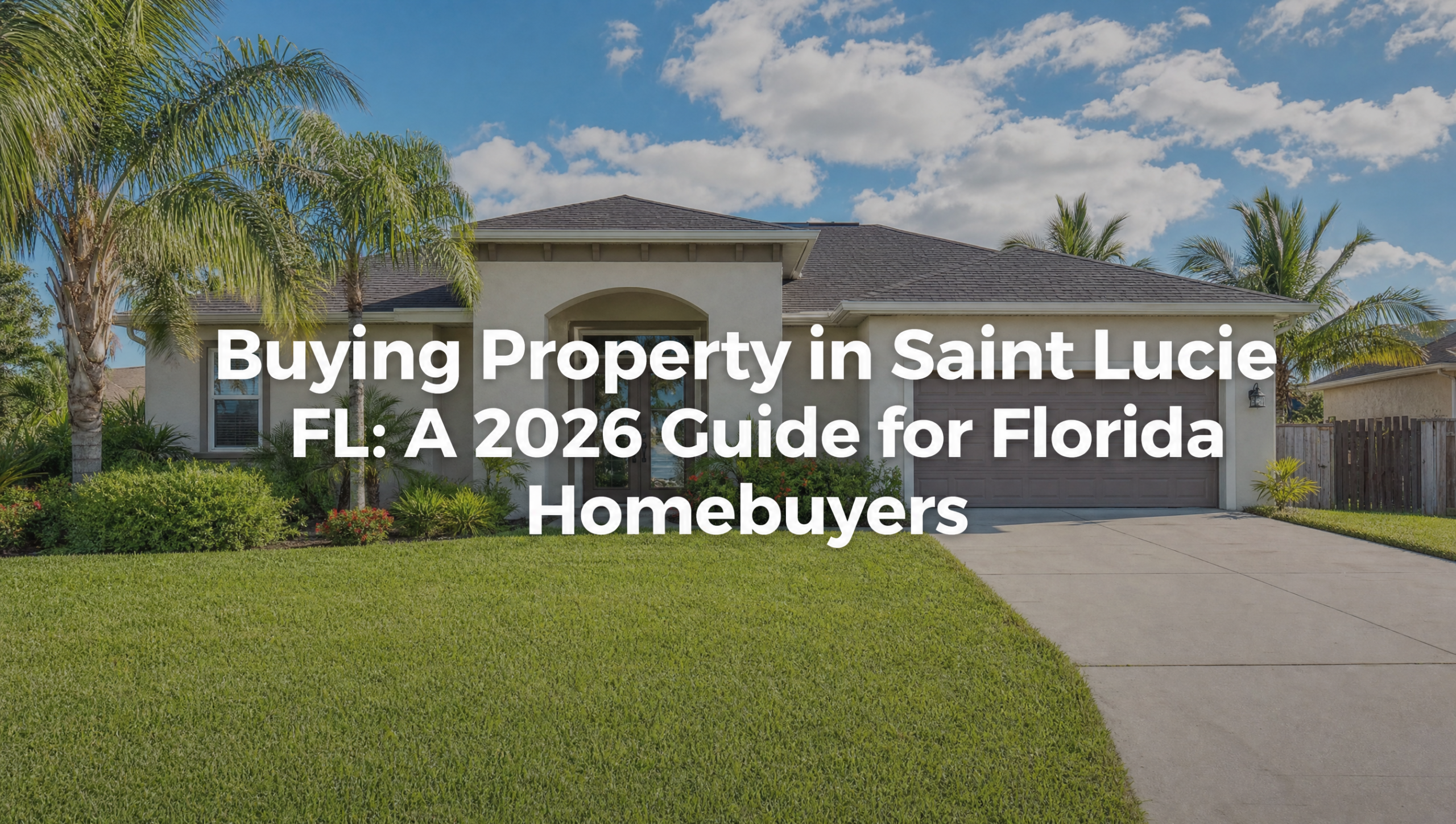
Buying Property in Saint Lucie FL: A 2026 Guide for Florida Homebuyers
From Port St. Lucie and Tradition to Fort Pierce, Hutchinson Island, and the quiet unincorporated corners of St. Lucie County — here is how to buy property in Saint Lucie FL with confidence in 2026: neighborhoods, prices, financing, inspections, flood zones, HOA rules, and Florida compliance, explained step by step.
Search Saint Lucie FL Homes for Sale Book a Free Buyer Consultation
Quick Answer: What Does “Buying Property in Saint Lucie FL” Mean in 2026?
When buyers search for Saint Lucie FL homes, they are usually looking across greater St. Lucie County on Florida’s Treasure Coast — including Port St. Lucie, Fort Pierce, Tradition, St. Lucie West, PGA Village, Hutchinson Island, Lakewood Park, White City, and unincorporated areas. The 2026 market is more balanced than the pandemic-era rush, most financed purchases close in 30 to 45 days, and buyers should plan for roughly 2% to 5% of the purchase price in closing costs. The biggest local success factors: get pre-approved first, check flood zones and roof age early, quote insurance during the inspection period, and read HOA or condo documents before you commit.
What This Guide Covers
- Why Saint Lucie FL Is Worth a Closer Look
- About Saint Lucie FL: Cities & Communities
- 2026 Market Trends for Buyers
- The Florida Home Buying Process, Step by Step
- Closing Costs, Taxes & Insurance Budgeting
- Florida Compliance & Legal Terms for 2026
- Common Buyer Mistakes to Avoid
- FAQ: Buying Property in Saint Lucie FL
- Final Thoughts & Next Steps
Why Buying Property in Saint Lucie FL Is Worth a Closer Look
Buying property in Saint Lucie FL is about more than choosing a house. It is about finding the right corner of Florida’s Treasure Coast for your lifestyle, your budget, and your long-term plans.
When people search for Saint Lucie FL homes, they are usually looking across the greater St. Lucie County area. That includes Port St. Lucie, Fort Pierce, St. Lucie Village, Hutchinson Island, Lakewood Park, White City, Indian River Estates, Tradition, St. Lucie West, PGA Village, Torino, and other nearby communities.
That gives buyers a lot of variety. You can look for a new construction home in a master-planned neighborhood, a gated community with resort-style amenities, a golf property near PGA Village, a historic home near downtown Fort Pierce, a beach-area condo near Hutchinson Island, a quiet home with no HOA, or a newer home close to schools, parks, shopping, and commuter routes.
That flexibility is one of the biggest reasons Saint Lucie County real estate keeps attracting buyers from South Florida, the Northeast, the Midwest, and other parts of Florida. The area offers coastal living, suburban convenience, nature preserves, boating, golf, newer master-planned communities, and more affordable options than many coastal markets farther south.
But here is the part many buyers do not realize at first: buying in Florida takes planning. Insurance, flood zones, HOA rules, inspections, roof age, property taxes, title work, homestead exemption, and closing costs can all affect your decision.
A home can look beautiful online and still have hidden costs. Another home may not photograph perfectly but could be a smart purchase because the location, condition, insurance profile, and resale potential are strong.
This guide walks you through how to buy a home in Saint Lucie FL with confidence. You will learn what makes the area attractive, how the Florida home buying process works, which legal and compliance terms matter in 2026, and which questions to ask before you sign a contract. When you are ready to compare current properties, start with Jeannie Jacobson’s local buyer resource for homes for sale in Saint Lucie FL, or browse live listings through the home search tool.
Moving from out of state? Flood insurance, wind mitigation, CDD fees, and homestead exemption all work differently in Florida than almost anywhere else. Jeannie’s relocation guide for the Port St. Lucie area covers the questions out-of-area buyers ask most before they commit to the Treasure Coast.
About Saint Lucie FL: What Buyers Should Know
Saint Lucie FL is best understood as the St. Lucie County lifestyle market on Florida’s Treasure Coast. It sits along the Atlantic Coast between Indian River County to the north and Martin County to the south, with quick access to Port St. Lucie, Fort Pierce, Hutchinson Island, Jensen Beach, Stuart, and Palm City.
Here is how the major communities compare — and what each one asks of a careful buyer.
Port St. Lucie: The Residential Hub
Port St. Lucie is the largest city in St. Lucie County and one of the most searched real estate markets in the area. Buyers love it because it offers newer homes, larger neighborhoods, shopping, medical access, parks, schools, and easy routes to I-95 and Florida’s Turnpike.
Popular Port St. Lucie areas include Tradition, St. Lucie West, PGA Village, Torino, the Becker Road corridor, Southbend, Floresta, Bayshore, and established neighborhoods around Port St. Lucie Boulevard and Prima Vista. Port St. Lucie is especially attractive for buyers who want:
- Newer single-family homes and larger floor plans
- Gated communities or 55+ communities
- No-HOA neighborhoods with more yard space
- Access to shopping, schools, and medical care
- A quieter Florida lifestyle without feeling isolated
If Port St. Lucie is high on your list, Jeannie’s Port St. Lucie buyer guide is a smart next step.
Tradition: Master-Planned Living in Saint Lucie FL
Tradition is one of the most recognizable communities in the Saint Lucie FL market. It is a master-planned area in western Port St. Lucie with newer construction, sidewalks, lakes, neighborhood villages, shopping, dining, medical services, events, and a strong community feel.
Buyers who want a polished, organized neighborhood often start here. Tradition offers different lifestyles within the larger community, including gated sections, 55+ communities, townhomes, villas, and larger single-family homes.
The important thing is to compare the villages carefully. HOA fees, amenities, builder quality, age, lot size, resale trends, and community rules can vary. Before choosing a home in Tradition, review the monthly costs and the lifestyle fit — not just the floor plan. You can explore the area in detail through Jeannie’s Tradition Port St. Lucie homes guide.
St. Lucie West and PGA Village
St. Lucie West is a major lifestyle and convenience hub in Port St. Lucie. It offers restaurants, shopping, medical offices, golf access, schools, and quick access to I-95. Many buyers like St. Lucie West because it feels established but still active.
PGA Village and nearby golf communities attract buyers who want a more refined setting with golf, gated entrances, club amenities, and mature neighborhood surroundings. Homes here may include single-family residences, villas, and larger properties with fairway or preserve views. If you are considering this part of the market, review Jeannie’s PGA Village homes guide for a community-by-community breakdown of fees, club access, and ownership costs.
Fort Pierce: Coastal, Historic, and Full of Character
Fort Pierce is the county seat and has a very different feel from Port St. Lucie. Buyers who want history, waterfront access, downtown character, marinas, older homes, beach proximity, or more affordable entry points often look here.
Fort Pierce can be a good fit for buyers who want historic neighborhoods, mainland homes near downtown, coastal condos, marina access, investment potential, a more old-Florida feel, and access to beaches and the Indian River Lagoon.
As with any coastal or older-home market, inspections matter. Buyers should pay close attention to roof condition, plumbing, electrical systems, wind mitigation, flood zones, insurance costs, and condo association documents when applicable. Jeannie’s Fort Pierce buyer resource and her Fort Pierce market playbook can help you compare Fort Pierce opportunities with Port St. Lucie and other Saint Lucie FL options.
Hutchinson Island and Coastal Living
For buyers who dream about being closer to the beach, Hutchinson Island and nearby barrier island areas are worth exploring. You may find condos, townhomes, waterfront properties, and homes with access to beaches, boating, fishing, and coastal recreation.
The trade-off is that coastal ownership requires extra diligence. Flood insurance, windstorm coverage, condo reserves, building maintenance, milestone inspection requirements, salt-air exposure, and association fees can all affect the real monthly cost. Coastal property can be wonderful — but it should be evaluated carefully, line by line.
Lakewood Park, White City, and Unincorporated St. Lucie County
Some buyers prefer quieter, more residential settings outside the busiest parts of Port St. Lucie and Fort Pierce. Lakewood Park, White City, Indian River Estates, and other unincorporated areas may offer larger lots, fewer restrictions, a more rural feel, or different price points.
These areas can be attractive for buyers who want space, privacy, or fewer HOA rules. But due diligence still matters. Depending on the property, you may need to review septic systems, wells, drainage, zoning, flood zones, road access, insurance, and future development plans for the surrounding land.
Largest SelectionPort St. Lucie
Newer homes, gated and 55+ communities, no-HOA pockets, shopping, schools, and commuter access. The county’s residential engine.
Master-PlannedTradition & St. Lucie West
Walkable village planning, amenities, events, golf, and new construction. Compare HOA and CDD costs village by village.
Historic & CoastalFort Pierce
Downtown character, marinas, the Indian River Lagoon, and more affordable entry points — with older-home inspections front and center.
Space & PrivacyUnincorporated Areas
Lakewood Park, White City, and Indian River Estates offer larger lots and fewer rules — review wells, septic, drainage, and zoning.
Saint Lucie FL Market Trends for Buyers in 2026
The Saint Lucie FL housing market in 2026 is more balanced than the fast-moving years when buyers had to rush into decisions. Inventory has improved in many segments, and buyers often have more room to compare homes, negotiate repairs, ask for seller credits, or evaluate price reductions.
That does not mean every home is a bargain.
Move-in-ready homes in popular neighborhoods can still attract strong interest, especially when they have newer roofs, clean inspections, updated interiors, reasonable HOA fees, and good insurance profiles. Homes with older roofs, high HOA costs, dated interiors, or insurance challenges may give buyers more negotiating power.
The smartest buyers look beyond the list price and ask:
- How does this home compare to recent nearby sales?
- How long has it been on the market — and has the seller reduced the price?
- What is the likely insurance cost, and is the roof near the end of its useful life?
- Are there HOA, condo, CDD, or special assessment costs?
- Is the home in a flood zone?
- Are taxes likely to increase after purchase?
- Does the home fit my long-term lifestyle and resale goals?
Every one of those answers changes either your monthly payment, your insurability, or your position when it is time to sell. For current local pricing context, use Jeannie’s Port St. Lucie real estate market report as a companion resource while comparing homes, and her Port St. Lucie vs. Stuart vs. Jensen Beach guide if you are still deciding between Treasure Coast towns.
Buying with rental income in mind — for example a Fort Pierce duplex or a PSL single-family rental? The math is different; start with the investment property guide before writing offers.
The Home Buying Process in Florida: 11 Steps From Pre-Approval to Keys
Buying a home in Saint Lucie FL becomes much easier when you know what happens next. Here is the typical Florida home buying process from first conversation to keys in hand.
Get Pre-Approved Before You Start Touring
The first step is mortgage pre-approval. This is not just a formality. In Florida, a strong pre-approval helps you understand your true budget and gives sellers confidence when you make an offer.
Your lender will usually review income, credit score, employment history, debts, assets, down payment funds, loan type, estimated taxes and insurance, and HOA or condo dues. Common financing options include conventional loans, FHA loans, VA loans, jumbo loans, and certain first-time buyer or down payment assistance programs. Some buyers may also qualify for Florida Hometown Heroes or local homebuyer assistance, depending on current funding and eligibility rules — Jeannie keeps a dedicated Hometown Heroes resource page with the current details.
Do not shop only by purchase price. In Saint Lucie FL, your monthly payment may include mortgage principal and interest, property taxes, homeowners insurance, flood insurance, HOA dues, condo fees, mortgage insurance, and possible CDD or special assessment costs. A $375,000 home with low insurance and no HOA may feel very different from a $375,000 home with high association dues and flood insurance. Run both scenarios through the mortgage calculators before you tour.
First purchase? Start with Jeannie’s first-time home buyer guide.
Define Your Saint Lucie FL Lifestyle Goals
Before you tour homes, decide what matters most. Do you want new construction? A no-HOA neighborhood? Quick access to I-95? Beach proximity? A gated community or a 55+ lifestyle? Do schools matter? Are you commuting to Palm Beach County, Martin County, or Fort Pierce — or working from home?
Saint Lucie FL offers many different lifestyles, so narrowing your priorities saves weeks of wasted touring. As a starting framework:
- Choose Tradition if you want newer homes, planning, amenities, and community events.
- Choose St. Lucie West if convenience, golf, shopping, and established neighborhoods matter.
- Choose Fort Pierce if you like historic character, waterfront access, and coastal energy.
- Choose Hutchinson Island if beach proximity is the priority.
- Choose unincorporated areas if you want more space or fewer restrictions.
- Choose established PSL neighborhoods if you want value, location, and flexibility.
Your lifestyle goals should shape your search from the beginning — Jeannie’s guide to the best neighborhoods for 2026 compares the areas buyers ask about most.
Start the Property Search
Once your budget and location goals are clear, your home search becomes more focused. Online listings are useful, but the details behind the listing matter even more. When reviewing Saint Lucie FL homes for sale, look closely at:
- Year built, roof age, HVAC age, and water heater age
- Electrical panel and plumbing type
- Impact windows or storm shutters
- Flood zone and lot drainage
- HOA or condo dues and community rules
- School zones and insurance considerations
- Recent comparable sales and days on market
- Seller disclosure details, open permits, or code issues
This is where a local real estate agent saves you time. Two homes can look similar online and have very different costs after inspections, insurance, taxes, and repairs. Set up alerts in the home search portal so well-priced new listings reach you on day one.
Tour Homes With a Buyer’s Eye
When you walk through homes, do not focus only on finishes. Paint colors, furniture, and staging can distract from the bigger picture. Look at the things that affect safety, cost, and resale: roof condition, ceiling stains, cracks or settlement signs, drainage around the home, window condition, age of major systems, water pressure, odors or moisture, pool equipment, fence condition, landscaping and irrigation, neighborhood traffic, noise, parking, sun exposure, and HOA compliance.
It is okay to love a home emotionally. Just make sure the numbers and condition support that feeling.
Make a Strong, Smart Offer
When you find the right home, your offer should be strategic. A good offer is not always the highest price — it is the cleanest combination of price, terms, timing, and buyer strength.
A Florida offer usually includes purchase price, escrow deposit, financing terms, inspection period, loan approval deadline, appraisal terms, closing date, title company or closing agent details, personal property included, seller credits if requested, HOA or condo document review, and special addenda if needed.
In a balanced market, buyers may have room to negotiate. You might ask for closing cost assistance, rate-buydown credits, repairs, a lower price, or a flexible closing date. In a competitive situation, you may need stronger terms to stand out. The goal is to protect your interests while making the offer appealing enough for the seller to accept.
Complete Inspections During the Inspection Period
Most Florida buyers should schedule inspections quickly after the contract is signed. Even if the property is being sold “As Is,” you still need to inspect it. “As Is” usually means the seller is not automatically required to make repairs — it does not mean you waive your right to investigate the home during the inspection period.
Common inspections in Saint Lucie FL include a general home inspection, roof inspection, wind mitigation inspection, four-point inspection, WDO or termite inspection, pool inspection, mold or moisture evaluation if needed, sewer scope where applicable, septic inspection and well water testing where applicable, irrigation inspection, and condo document review if applicable.
Insurance-related inspections are especially important in Florida. Roof age, electrical systems, plumbing, HVAC, and wind protection can affect whether a home is affordable to insure at all.
Handle the Appraisal and Loan Approval
If you are using financing, the lender will order an appraisal to confirm whether the home’s value supports the contract price. If the appraisal comes in at or above the contract price, the loan moves forward. If it comes in low, you may need to renegotiate, bring extra cash, request a price adjustment, or review your contract options.
During this stage, do not make big financial changes. Avoid opening new credit cards, buying furniture on credit, financing a car, changing jobs, or moving large amounts of money without documentation. Lenders may re-check your finances right before closing.
Review Title, Survey, and Insurance
A title search checks ownership history and looks for issues such as liens, judgments, unpaid taxes, easements, mortgages, or recording errors. Title insurance helps protect against covered title problems — a lender’s policy protects the lender, and an owner’s policy protects you.
You may also need a survey, especially for single-family homes. A survey can show boundary lines, fences, easements, encroachments, and improvements.
At the same time, secure homeowners insurance early. In Florida, waiting too long to shop insurance creates stress near closing. If the home is in a flood zone, you may need a separate flood policy. Ask for quotes as soon as you are under contract.
Review HOA, Condo, and Community Documents
Many Saint Lucie FL homes are located in homeowners associations, condo associations, gated communities, or master-planned developments. Do not skip the documents.
Review monthly or quarterly dues and what they include, rental restrictions, pet rules, parking and vehicle restrictions, fence and exterior rules, architectural approval requirements, reserve funding, pending litigation, recent or upcoming special assessments, transfer fees, capital contributions, CDD assessments, club fees, and insurance responsibilities.
For condo buyers, also review the budget, reserves, milestone inspection status if applicable, structural integrity reserve study information if applicable, board meeting notes, and any pending repairs. A beautiful condo with underfunded reserves or rising assessments may not be as affordable as it looks.
Final Walkthrough and Closing
The final walkthrough usually happens shortly before closing. Confirm the home is in the expected condition, agreed repairs were completed, included appliances remain, and no new damage has occurred.
At closing, you sign loan documents, title documents, settlement statements, tax forms, disclosures, and deed-related paperwork. Your funds must be wired carefully using verified instructions from the title company. Always verify wiring instructions by phone with a trusted number — wire fraud is a serious risk in real estate transactions.
Once all documents are signed, funds are received, and the deed is recorded, the home becomes yours.
Post-Closing Considerations
After closing, take care of the details that protect your investment:
- Apply for Florida homestead exemption if the home is your primary residence
- Transfer utilities and update your mailing address
- Save your closing documents, inspection reports, and warranties
- Schedule HVAC maintenance and review HOA rules and contacts
- Set reminders for insurance renewals and confirm your first mortgage payment date
- Create a hurricane preparation plan and keep receipts for improvements
Florida homeownership rewards organized buyers. A little planning after closing prevents big headaches later.
Closing Costs, Property Taxes, and Insurance: Budgeting for a Saint Lucie FL Purchase
The list price is only the starting line. Before you write an offer anywhere in St. Lucie County, build a budget across three categories: one-time closing costs, recurring carrying costs, and maintenance reserves. Here is a planning framework — your actual figures depend on your loan, contract, insurance quotes, and negotiated credits.
| Cost Category | Typical Planning Range | What Affects It in St. Lucie County |
|---|---|---|
| Buyer closing costs | Roughly 2%–5% of purchase price | Lender fees, appraisal, prepaid taxes and insurance, escrow reserves, recording fees, title costs, survey, inspections |
| Escrow deposit | Negotiable; often 1%–3% | Market competitiveness, contract terms, seller expectations |
| Property taxes | Based on assessed value & millage | Assessed value may reset at your purchase price; homestead exemption and Save Our Homes caps apply only after you qualify |
| Homeowners insurance | Varies widely by property | Roof age, wind mitigation, construction type, distance to coast, claims history |
| Flood insurance | Property-specific | FEMA zone, elevation certificate, lender requirements — most relevant near canals, the Indian River Lagoon, and barrier islands |
| HOA / condo / CDD | $0 to several hundred per month | Amenities, gate, lawn care, club fees, association reserves, district debt |
The most common tax surprise: the seller’s current bill may reflect years of homestead exemption and Save Our Homes caps that do not transfer to you. When a property sells, assessed value may reset based on the new sale price — so always estimate your taxes from your purchase price, not the listing’s tax history.
Pressure-test your numbers with the mortgage calculators, browse the checklists in the buyer resources library, and — if you work in an eligible profession — check current funding for Hometown Heroes down payment assistance early, because funds can run out during the year.
Florida Real Estate Compliance and Legal Terms Buyers Should Know in 2026
Florida real estate has its own language. You do not need to become a lawyer to buy a home, but you should understand the terms that affect your rights, costs, and obligations.
Seller Disclosure Requirements
Florida sellers generally must disclose known facts that materially affect the value of residential property when those facts are not readily observable and are not known to the buyer. That can include water intrusion, roof leaks, structural defects, mold history, unpermitted work, boundary disputes, major system problems, or other material defects.
A seller disclosure is helpful, but it does not replace inspections. Some sellers may not know about an issue; some problems only become clear after a licensed inspector reviews the home.
Flood Disclosure and Flood Insurance
Florida requires residential flood disclosure in real estate transactions, and buyers should understand that standard homeowners insurance typically does not cover flood damage.
In Saint Lucie FL, flood risk depends on the exact property. Homes near canals, drainage areas, the Indian River Lagoon, coastal zones, or low-lying areas may have very different risk profiles. Before closing, ask: Is the home in a FEMA flood zone? Has the property experienced flood damage or a flood claim? Is flood insurance required by the lender, and what would it cost? Is there an elevation certificate? Are there drainage concerns on the lot?
A flood zone does not automatically mean “do not buy.” It means you need to understand risk and cost before you commit.
HOA Disclosure Requirements
If you buy a home in a mandatory homeowners association, Florida law requires HOA disclosure. This matters because HOA membership affects your monthly cost, property use, and future obligations. Review covenants, restrictions, assessments, special assessments, architectural rules, parking rules, rental rules, pet rules, and community standards. Some buyers love HOAs for the amenities and consistency; others prefer no-HOA freedom. The right answer depends on your lifestyle.
Condo and Co-op Regulations
Condo and co-op buyers in Florida should be especially careful in 2026. Statewide attention on building safety, milestone inspections, reserves, structural integrity reserve studies, and association financial health has made condo due diligence more important than ever — especially for older buildings, coastal condos near Hutchinson Island and Fort Pierce, and multi-story communities.
Before buying a condo, review the declaration, bylaws, rules and regulations, budget, reserve schedule, insurance coverage, maintenance responsibilities, meeting minutes, pending litigation, special assessments, milestone inspection reports if applicable, and structural integrity reserve study information if applicable.
Title Requirements and Title Insurance
Title work confirms that the seller can legally transfer the property and that no unresolved ownership issue threatens your rights. Title insurance can protect against covered claims such as unknown liens, recording errors, ownership defects, or fraud. A lender’s title policy protects the lender; an owner’s title policy protects the buyer. Review your title commitment and ask about exceptions, easements, restrictions, and survey matters before closing.
Property Taxes and Assessment Changes
Florida property taxes can surprise new buyers because the seller’s current tax bill may not reflect what you will pay after purchase. When a property sells, assessed value may reset based on the new sale price — especially if the seller held homestead exemption and Save Our Homes protections for many years. Estimate taxes from your purchase price, not the listing’s tax history.
Homestead Exemption and Portability
If the Saint Lucie FL home will be your primary residence, you may qualify for Florida homestead exemption. Homestead can reduce taxable value and may help limit future assessed-value increases under Save Our Homes rules. You must apply through the St. Lucie County Property Appraiser by the required deadline. If you previously owned a homesteaded property in Florida, ask about portability — transferring some of your accumulated Save Our Homes benefit to the new home. This is one of the most important post-closing steps for full-time Florida residents.
Radon Testing and Notice
Florida real estate documents commonly include a radon gas notice. Radon is a naturally occurring radioactive gas that may present health risks at elevated levels. Many buyers do not test for radon, but testing can be requested during the inspection period for additional peace of mind. If a mitigation system exists, ask for documentation and service history.
Environmental Disclosures and Property-Specific Risks
Some properties require extra review because of location, land use, or improvements. Depending on the home, you may need to evaluate wetlands, conservation easements, septic systems, wells, drainage easements, open permits, code violations, protected habitat areas, prior additions, unpermitted work, soil or drainage concerns, canal or waterfront maintenance, and coastal exposure. This is especially important for older homes, larger lots, waterfront properties, and homes in unincorporated St. Lucie County.
Statutory Warranties and New Construction
New construction is popular in Saint Lucie FL, especially around Port St. Lucie, Tradition, and the western growth corridors. Builder contracts are not the same as standard resale contracts. Review builder warranty terms, structural warranty coverage, workmanship warranty periods, deposit requirements, design-center costs, construction timelines, delay clauses, closing extensions, final walkthrough procedures, the punch-list process, appliance warranties, and what is included versus upgraded.
A builder sales representative works for the builder. You can still have your own buyer representation before signing anything — Jeannie’s new construction buyer playbook walks through the questions to ask at the sales office.
Common Mistakes Saint Lucie FL Buyers Should Avoid
Buying a home is exciting, but rushing can be expensive. Here are the mistakes local buyers make most often:
- Shopping before getting pre-approved
- Focusing only on price instead of total monthly cost
- Ignoring insurance until late in the process
- Skipping inspections on newer homes
- Assuming all HOA communities are the same
- Not reviewing flood zones before falling in love with a house
- Forgetting that taxes may reset after purchase
- Overlooking roof age and open permits
- Assuming new construction contracts are buyer-friendly
- Falling in love with finishes and missing major repairs
- Waiting too long on a well-priced home
- Overpaying for a home with expensive deferred maintenance
- Not working with a local agent who understands Saint Lucie FL micro-markets
The goal is not to scare you — it is to help you buy wisely. You can see how Jeannie has guided other Treasure Coast buyers on her reviews page.
FAQ: Buying Property in Saint Lucie FL
These are the questions buyers ask most about purchasing property in Saint Lucie FL in 2026. Tap any question to expand the answer.
Yes — Saint Lucie FL can be a strong option for buyers who want Florida living with a mix of affordability, newer homes, coastal access, parks, golf, and suburban convenience. The area offers many choices, from Port St. Lucie and Tradition to Fort Pierce, Hutchinson Island, and unincorporated communities. Start comparing on the Saint Lucie FL community page.
Not exactly. Many people use “Saint Lucie FL” when searching for St. Lucie County or the broader Saint Lucie area. Port St. Lucie is the largest city in the county, while Fort Pierce is the county seat. St. Lucie Village and unincorporated areas like Lakewood Park and White City are also part of the county.
Most financed purchases take about 30 to 45 days from contract to closing. Cash purchases may close faster. New construction can take much longer depending on the builder, permitting, construction stage, and supply timelines.
Buyer closing costs often range from about 2% to 5% of the purchase price, depending on loan type, lender fees, title costs, prepaid taxes, insurance, escrow reserves, recording fees, inspections, and negotiated credits. Your lender and closing agent can provide a more accurate estimate once you have a property and loan program. Model scenarios with these mortgage calculators.
Focus on roof condition, HVAC age, plumbing, electrical systems, water heater, windows, drainage, attic condition, signs of moisture, appliances, pool equipment, irrigation, pests, and any unpermitted improvements. In Florida, roof age and wind mitigation features can strongly affect insurance cost and eligibility.
Yes — qualified buyers may have access to Florida Housing programs, Hometown Heroes, local assistance, lender-based programs, FHA loans, VA loans, or other options depending on funding and eligibility. Program rules change, so check availability early. See the Hometown Heroes 2026 guide and the first-time buyer guide.
A fixed-rate mortgage keeps the same interest rate for the life of the loan. An adjustable-rate mortgage (ARM) usually starts with a fixed introductory rate and then adjusts later based on the loan terms. Fixed-rate loans offer predictability; ARMs may offer a lower starting rate but carry future payment risk.
If the home is your primary residence and you meet Florida requirements, homestead exemption may reduce your taxable value. It may also qualify the property for Save Our Homes assessment limits in future years. You must apply through the St. Lucie County Property Appraiser by the required deadline. If you previously owned a homesteaded Florida property, ask about portability.
The main risks are flood damage, higher insurance costs, lender-required flood insurance, resale considerations, and possible future premium changes. Review the property’s flood zone, elevation, drainage, prior flood history, and insurance quotes before closing. Flood risk in St. Lucie County is parcel-specific, not citywide.
New construction may offer modern layouts, warranties, energy efficiency, and lower immediate maintenance. Resale homes may offer better locations, established neighborhoods, larger lots, mature landscaping, and more negotiation room. The right choice depends on timeline, budget, lifestyle, and contract terms — compare both in the new construction playbook.
Yes. Many Port St. Lucie, Tradition, St. Lucie West, PGA Village, 55+, and gated neighborhoods have HOAs. Some buyers love the amenities and neighborhood standards; others prefer no-HOA flexibility. Always read the governing documents before buying. For amenity-focused options, see the 55+ communities guide.
Yes, depending on your contract and the seller’s motivation. You may request repairs, a credit, a price reduction, or other concessions. In an “As Is” contract, the seller may decline repairs, but you may still have inspection rights — including the right to cancel — during the agreed period.
Popular areas include Tradition, St. Lucie West, PGA Village, Torino, Becker Road, Southbend, Floresta, Bayshore, Fort Pierce, Hutchinson Island, Lakewood Park, White City, and Indian River Estates. The best area depends on budget, commute, lifestyle, HOA preference, and desired home type. See the 2026 neighborhood guide for side-by-side comparisons.
In many cases, Fort Pierce may offer lower entry prices than some Port St. Lucie neighborhoods, but it depends on the exact location, property condition, flood zone, and home type. Coastal condos, waterfront homes, and renovated historic properties can vary widely in price. Compare current inventory on the Fort Pierce buyer page.
A local licensed real estate professional can help you compare neighborhoods, understand pricing, review disclosures, coordinate inspections, negotiate terms, and avoid expensive surprises. Jeannie Jacobson helps buyers throughout Saint Lucie FL, Port St. Lucie, Fort Pierce, Tradition, St. Lucie West, and the broader Treasure Coast. Contact Jeannie or book a buyer consultation to get started.
Final Thoughts: Buy With Confidence in Saint Lucie FL
Buying property in Saint Lucie FL gives you access to one of Florida’s most flexible lifestyle markets. You can choose a newer home in Port St. Lucie, a master-planned community in Tradition, a golf setting near PGA Village, a coastal condo near Hutchinson Island, a historic home in Fort Pierce, or a quieter property in an unincorporated area.
The opportunity is real, but the details matter. A smart buyer looks at more than the asking price — you want to understand insurance, roof age, flood risk, taxes, HOA rules, inspections, title, financing, and long-term resale potential. That is where local guidance makes a difference.
Start your search with Jeannie’s Saint Lucie FL homebuyer resource, compare current Port St. Lucie homes for sale, explore Tradition homes and lifestyle details, and review the latest Port St. Lucie market report. Selling a home before you buy? Begin with a free home valuation.
The right home is not just the one that looks good online. It is the one that fits your life, your budget, and your future.
Ready to Explore Saint Lucie FL Homes?
Get local guidance on neighborhoods, pricing, inspections, and negotiations from a licensed Florida real estate professional who lives and works on the Treasure Coast.
Schedule a Free Consultation Start Your Home SearchDisclaimer: This article is for general educational purposes only and is not legal, tax, mortgage, insurance, or financial advice. Real estate laws, market conditions, insurance rules, and assistance program funding can change. Buyers should consult qualified professionals — including licensed attorneys, lenders, insurance agents, and tax advisors — for guidance specific to their transaction. All information is deemed reliable but not guaranteed and should be independently verified. Equal Housing Opportunity.