

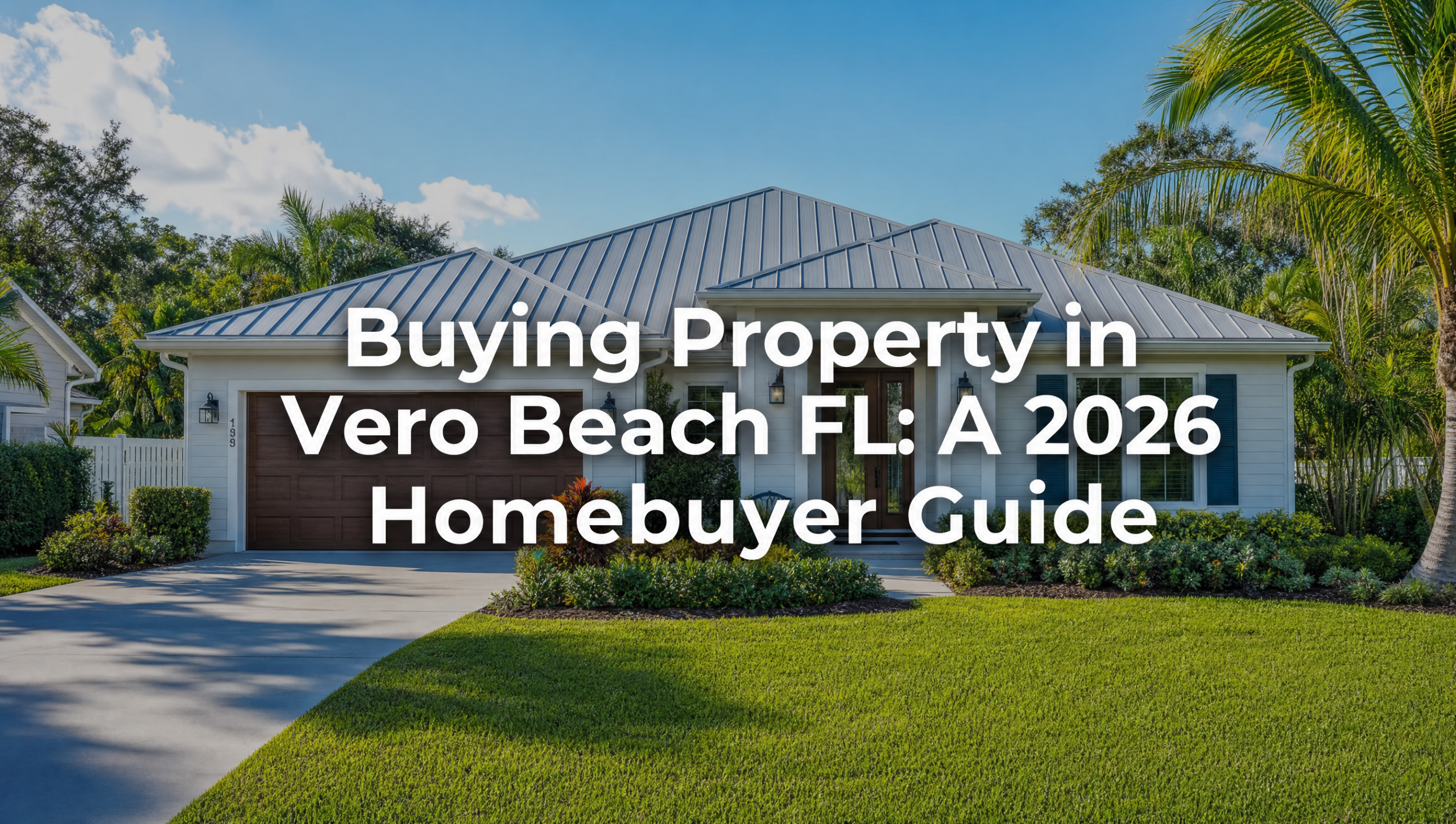
Buying Property in Vero Beach FL: A 2026 Homebuyer Guide
From Central Beach and Ocean Drive to the barrier island, Grand Harbor and The Moorings, downtown, and the newer west-side communities — here is how to buy property in Vero Beach FL with confidence in 2026: neighborhoods, prices, financing, inspections, flood zones, HOA and condo rules, and Florida compliance, explained step by step.
Search Vero Beach Homes for Sale Book a Free Buyer Consultation
Quick Answer: Is Buying Property in Vero Beach FL a Good Move in 2026?
Vero Beach — in Indian River County, north of Fort Pierce — offers one of Florida’s most graceful, less-crowded coastal lifestyles: Central Beach and Ocean Drive, barrier-island and 32963 living, the Indian River Lagoon, culture and golf, plus more accessible mainland and west-side neighborhoods. The 2026 market is more balanced than the recent boom: most financed purchases close in 30 to 45 days, buyers should budget roughly 2% to 5% of the price for closing costs, and the biggest local factors are flood zones, windstorm/flood insurance, roof age, condo reserves, and HOA or club fees. Because a Central Beach condo, a Grand Harbor home, a barrier-island estate, and a west Vero new build each behave differently, the smartest buyers compare full carrying cost — not just list price. This guide walks through every step.
What This Guide Covers
- Why Vero Beach Is Worth a Serious Look
- About Vero Beach: Neighborhoods & Communities
- 2026 Vero Beach Market Trends
- The Florida Home Buying Process, Step by Step
- Closing Costs, Taxes & Insurance Budgeting
- Florida Compliance & Legal Terms for 2026
- Common Buyer Mistakes to Avoid
- FAQ: Buying Property in Vero Beach FL
- Final Thoughts & Next Steps
Why Buying Property in Vero Beach FL Is Worth a Serious Look
Buying property in Vero Beach FL gives you access to one of Florida’s most graceful coastal communities. Vero Beach has a softer pace than many larger South Florida markets, but it still offers beaches, culture, boating, restaurants, shopping, medical access, golf, parks, and beautiful neighborhoods on both sides of the Indian River Lagoon. For many buyers, Vero Beach feels like the Florida they were hoping to find.
It is polished, but not flashy. Coastal, but not crowded in the same way as bigger beach cities. Upscale in places, but still practical in others. You can find oceanfront condos, barrier island homes, riverfront estates, golf communities, gated neighborhoods, mainland single-family homes, new construction pockets, 55+ options, and more affordable homes farther west. That variety is one of Vero Beach’s biggest strengths.
Some buyers come for Central Beach and Ocean Drive. Some want a condo close to the sand. Some want a mainland home near shopping and medical care. Some want a private community like Grand Harbor. Some want a newer home in a planned neighborhood. Others compare Vero Beach with Fort Pierce, Sebastian, Jensen Beach, Stuart, and Port St. Lucie before deciding which Treasure Coast lifestyle feels right.
But buying in Vero Beach is not something to do casually. Insurance matters. Flood zones matter. Roof age, storm protection, HOA rules, condo reserves, property taxes, title work, inspections, appraisals, and Florida disclosure requirements can all affect whether a home is truly the right purchase. A home can look perfect online and still have expensive surprises. A beach condo may seem easy to own until you review reserves, building insurance, milestone inspection issues, and assessments. A riverfront home may need seawall, dock, drainage, elevation, and flood insurance review. A mainland home may offer better monthly costs, but you still need to understand roof age, wind mitigation, permits, and long-term resale appeal.
This guide walks you through how to buy a home in Vero Beach FL with confidence — local neighborhoods, market trends, the Florida home buying process, financing, inspections, closing costs, flood insurance, HOA and condo rules, 2026 Florida compliance terms, and the questions smart buyers should ask before making an offer. When you are ready to compare current homes, start with Jeannie Jacobson’s local resource for Vero Beach homes for sale, or browse live listings through the home search tool.
Comparing Treasure Coast towns? Many Vero buyers also weigh nearby Fort Pierce, Port St. Lucie, and Stuart. The Florida home buying guide for 15 cities covers the statewide essentials, and this page focuses on what is specific to buying in Vero Beach.
See What’s on the Market in Vero Beach Today
Central Beach condos, barrier-island homes, riverfront properties, and west-side new builds move quickly in Vero. Get matched to listings that fit your budget and lifestyle.
Browse Vero Beach Listings Talk to JeannieAbout Vero Beach FL: Neighborhoods and Communities
Vero Beach is located in Indian River County on Florida’s Treasure Coast, north of Fort Pierce and south of Sebastian. It sits between the Atlantic Ocean and the Indian River Lagoon, with a barrier island lifestyle on the east side and a more traditional mainland residential market to the west.
Vero Beach is known for Ocean Drive and Central Beach, walkable beachside shopping and dining, the Indian River Lagoon, Riverside Theatre, the Vero Beach Museum of Art, McKee Botanical Garden, a historic downtown, barrier island condos and homes, waterfront and riverfront properties, golf and gated communities, mainland neighborhoods with more accessible pricing, Indian River County citrus heritage, and a quieter Treasure Coast pace. Buyers often describe Vero Beach as refined but relaxed — culture, restaurants, boutiques, beaches, parks, and waterfront recreation without the feel of a giant metro area. That lifestyle is a major reason people relocate here. Explore it on Jeannie’s Vero Beach community page.
Central Beach and Ocean Drive
Central Beach is one of the most recognizable parts of Vero Beach — where buyers often picture the classic Vero lifestyle: Ocean Drive, beach access, boutique hotels, restaurants, shops, low-rise coastal buildings, and a walkable island feel. Buyers who want Central Beach often care about lifestyle as much as square footage: walking to dinner, strolling to the beach, enjoying local boutiques, or owning a seasonal home that feels easy and elegant.
Property types may include beachside condos, oceanfront residences, boutique buildings, townhomes, older single-family homes, renovated coastal homes, and seasonal lock-and-leave properties. The benefit is location; the trade-off is that coastal property requires serious due diligence. Before buying in Central Beach or near Ocean Drive, review flood zone, windstorm insurance, building reserves, roof age, impact glass, salt-air exposure, parking, rental rules, pet rules, and association fees. A beachside property can be a wonderful lifestyle purchase, but you want the numbers and documents to support the dream.
The Barrier Island and 32963 Lifestyle
Many buyers searching for Vero Beach are specifically looking at the barrier island, often associated with the 32963 ZIP code. This part of the market can include beachside estates, oceanfront condos, riverfront properties, private communities, luxury homes, and low-maintenance seasonal residences. The barrier island has a special feel — quieter than many South Florida coastal markets, with mature landscaping, ocean access, lagoon views, and a more discreet luxury atmosphere.
Buyers may be drawn to oceanfront homes, riverfront estates, beach condos, gated island communities, private club settings, seasonal residences, walkable beachside areas, and luxury low-rise buildings. The key is to evaluate each property carefully — oceanfront, riverfront, and beach-area homes can have very different insurance, maintenance, and flood considerations. Ask about elevation, storm protection, drainage, seawall or dock condition, building maintenance, structural inspections, insurance history, and association documents.
Grand Harbor, The Moorings, and Private Community Living
Vero Beach has several private and gated communities that attract buyers looking for amenities, security, golf, boating, tennis, club life, and a polished neighborhood environment. Grand Harbor is one of the area’s best-known communities, offering a mix of homes, condos, waterfront options, golf, marina access, and club amenities. The Moorings is another highly regarded barrier island community known for boating, beach lifestyle, and private club appeal.
Buyers considering these communities should look beyond the home itself — review HOA dues, club membership requirements, golf or social dues, marina or dock fees, capital contributions, assessments, guest rules, rental restrictions, pet policies, insurance responsibilities, reserves, and maintenance obligations. A private community can offer an exceptional lifestyle if you will use the amenities and the total cost fits your budget. If you mainly want the home and not the club lifestyle, make sure the recurring costs still make sense.
Mainland Vero Beach and Downtown
Mainland Vero Beach offers a broader range of homes and price points than the barrier island — established neighborhoods, newer communities, 55+ options, condos, villas, townhomes, and single-family homes close to shopping, medical care, schools, restaurants, and major roads. Mainland Vero can appeal to buyers who want more value for the money, larger lots in some neighborhoods, easier access to daily services, lower coastal exposure than barrier-island properties, newer construction options, and a shorter drive to I-95. Mainland homes still require inspection and insurance review, but the overall cost profile may differ from coastal or waterfront property — compare roof age, HVAC, water heater, windows, storm protection, flood zone, HOA fees, recent sales, and property taxes before making an offer.
Downtown Vero Beach has its own appeal, separate from the beachside Ocean Drive area, with local restaurants, shops, galleries, events, historic buildings, and a community-centered feel. Downtown and nearby mainland neighborhoods may offer older single-family homes, renovated cottages, condos, townhomes, investment properties, walkable access to local businesses, and more accessible pricing than barrier-island locations. Older homes near downtown can be charming, but buyers should be careful about condition — roof age, electrical systems, plumbing, HVAC, permits, windows, drainage, and insurance eligibility all matter.
West Vero, Pointe West, Waterway Village, and Newer Communities
West Vero Beach has become important for buyers who want newer homes, planned communities, more space, and easier access to I-95. Communities and areas such as Pointe West, Waterway Village, Millstone Landing, and other west-side neighborhoods may appeal to buyers looking for newer construction, community amenities, sidewalks and lakes, modern floor plans, gated sections, clubhouses, pools and fitness areas, easier commuting routes, and more affordable options than barrier-island homes. These communities can be practical for families, retirees, relocation buyers, and people who want Vero Beach access with a more suburban feel. Before buying, review HOA documents, CDD or special district costs if applicable, builder quality, roof age, lot drainage, community reserves, rental restrictions, and resale trends. Newer does not mean automatic — you still need a strong inspection and a clear understanding of monthly costs.
Vero Beach Waterfront Homes and Condos
Waterfront living is one of Vero Beach’s biggest draws. Buyers may look along the Indian River Lagoon, canals, riverfront areas, or barrier-island waterways for views, boating, kayaking, fishing, or privacy. Waterfront homes require more due diligence than a standard inland property — ask about flood zone, elevation, flood insurance cost, seawall condition, dock and boat-lift condition, water depth, bridge clearance, canal or lagoon access, drainage, wind mitigation, roof age, impact windows or shutters, prior water intrusion, and insurance quotes. A waterfront home is not just a house; it is also a marine and maintenance asset.
Vero Beach also has many condo options near the beach, river, golf communities, and mainland neighborhoods, appealing to seasonal buyers, retirees, downsizers, and investors. Before buying a Vero Beach condo, ask about monthly condo fees and what they include, building insurance, roof responsibility, reserves, special assessments, pending litigation, milestone inspection status if applicable, structural integrity reserve study information if applicable, rental restrictions, pet rules, parking, guest policies, maintenance history, and elevator condition if applicable. The association’s financial health is just as important as the unit’s finishes.
Walkable & CoastalCentral Beach & Ocean Drive
Boutique condos, beach access, and a low-rise island feel. Review flood/windstorm insurance, reserves, roof age, and rental rules carefully.
Luxury & ClubBarrier Island, Grand Harbor & The Moorings
Oceanfront and riverfront estates, golf, and marina-club living (the 32963 lifestyle). Confirm club dues, capital contributions, and assessments.
Value & ConvenienceMainland & Downtown
Established and newer neighborhoods near shopping and medical care, plus downtown character. Lower coastal exposure; inspect older homes closely.
Newer & PlannedWest Vero & Pointe West
Modern floor plans, clubhouses, and easier I-95 access at more accessible price points. Compare HOA/CDD fees, builder quality, and reserves.
Vero Beach Real Estate Market Trends in 2026
The Vero Beach real estate market in 2026 is more balanced than the extremely competitive market buyers faced a few years ago. Buyers often have more time to compare homes, review inspections, ask for seller credits, and study the true cost of ownership. That does not mean every property is easy to negotiate.
Well-located homes, updated properties, clean condos with healthy associations, waterfront homes with strong documentation, and homes with newer roofs and good insurance profiles can still attract serious attention. Vero Beach is also a micro-market — a Central Beach condo, Grand Harbor home, mainland single-family property, west Vero new construction home, and barrier-island estate should not all be evaluated the same way. Before making an offer, ask:
- How does the price compare to recent nearby sales?
- How long has the property been on the market, and has the seller reduced the price?
- Are seller concessions available?
- What will insurance likely cost, and is flood insurance required or recommended?
- How old are the roof, HVAC, water heater, and windows?
- Are there HOA, condo, club, or marina fees, and are there upcoming assessments?
- What will property taxes look like after purchase?
- Does the home fit your long-term lifestyle?
For current local context on pricing, inventory, and buyer strategy, review Jeannie’s Vero Beach real estate market guide for 2025–2026 while comparing homes. To see why local buyers value experienced representation, read about Jeannie Jacobson as a Vero Beach Realtor.
Know What a Vero Beach Home Really Costs Before You Offer
A barrier-island condo and a mainland single-family home at the same price can carry very different monthly costs once insurance, club dues, and taxes are factored in. Run the numbers, then get a local read.
Use the Mortgage Calculators Schedule a CallThe Florida Home Buying Process in Vero Beach: 11 Steps to Closing
Buying a home in Vero Beach becomes much easier when you understand the steps. Here is how the Florida home buying process usually works from pre-approval to closing.
Get Pre-Approved Before You Start Touring
Your first step should be mortgage pre-approval. A strong pre-approval helps you understand your budget and gives sellers confidence when you make an offer. A lender will usually review income, credit score, employment history, monthly debts, assets, down payment funds, loan type, estimated property taxes, estimated homeowners insurance, flood insurance if applicable, and HOA, condo, or club dues.
Common financing options include conventional loans, FHA loans, VA loans, jumbo loans, adjustable-rate mortgages, condo loans, renovation loans, portfolio loans, and first-time buyer assistance programs. Vero Beach buyers should focus on total monthly cost, not just purchase price — your payment may include principal and interest, property taxes, homeowners insurance, flood insurance, HOA dues, condo fees, mortgage insurance, club costs, and possible special assessments. A $400,000 condo with high monthly fees may feel very different from a $400,000 mainland single-family home; a barrier-island property may carry different insurance and maintenance costs than a west Vero home; and a club community may offer beautiful amenities, but the membership costs need to match your lifestyle. Model scenarios with the mortgage calculators.
If you are early in the process, Jeannie’s Florida home buying guide can help you organize your search, and some buyers may qualify for Hometown Heroes assistance.
Decide What Kind of Vero Beach Lifestyle You Want
Before you search by bedroom count, think about how you want to live. Do you want to walk to the beach or have Ocean Drive nearby? Prefer a gated community, or a mainland home with more space? Do you need quick access to medical care? Are you looking for a seasonal condo or boating access? Do you prefer a newer west-side community? Are schools part of your search? Are you commuting to Fort Pierce, Sebastian, Port St. Lucie, or working from home?
Your lifestyle goals will narrow the search quickly. Central Beach may fit buyers who want walkability and beach access. The barrier island may fit luxury and seasonal buyers. Mainland Vero may fit full-time residents who want value and convenience. West Vero may fit buyers who want newer communities and practical access. Waterfront homes may fit boaters and nature lovers. The right home should fit your life, not just your budget.
Start the Property Search
Once your financing and priorities are clear, begin comparing Vero Beach homes for sale with a careful eye. Look at:
- Year built, roof age, HVAC age, and water heater age
- Electrical panel, plumbing type, and impact windows or shutters
- Flood zone, HOA or condo fees, club or membership fees, and association reserves
- Special assessments, rental restrictions, pet rules, and parking rules
- Recent comparable sales, days on market, seller disclosures, and open permits
Online photos can help you narrow options, but they do not tell the full story. A beautifully staged property can have expensive insurance or association concerns; a dated home may have a stronger lot, better location, and more long-term upside. Set up alerts through the home search portal so well-priced new listings reach you first.
Tour Homes With a Local Buyer’s Eye
When touring Vero Beach homes, pay attention to both lifestyle and condition: roof condition, ceiling stains, window condition, drainage around the property, cracks or settlement signs, water pressure, electrical panel age, HVAC condition, water heater age, signs of moisture, pest activity, pool equipment, fence condition, noise, parking, traffic patterns, and distance to beaches, schools, parks, shopping, medical care, and major roads.
For condos, look beyond the unit — building condition, roof, balconies, elevators, parking areas, exterior paint, landscaping, security, and general maintenance. For waterfront homes, evaluate seawalls, docks, boat lifts, drainage, elevation, and insurance. For older homes, look closely at renovation quality and whether improvements were permitted. The home should feel good emotionally, but the facts should support that feeling.
Make a Smart Offer
Once you find the right property, your offer should be based on recent sales, condition, seller motivation, days on market, and your financing strength. A Florida offer usually includes purchase price, escrow deposit, financing terms, inspection period, loan approval deadline, appraisal terms, closing date, title and closing details, seller credits if requested, personal property included, HOA or condo document review, and special addenda if needed.
In a balanced market, buyers may have room to negotiate price, repairs, closing cost assistance, rate-buydown credits, or flexible closing terms. In a stronger micro-market — especially for a clean barrier-island condo or well-priced waterfront home — you may need cleaner terms to compete. The goal is not just to get the home; the goal is to buy it on terms that protect your money.
Schedule Inspections Quickly
After your offer is accepted, your inspection period begins, and the deadline matters. Many Florida residential transactions use an “As Is” contract — that does not mean you skip inspections. It usually means the seller is not automatically required to make repairs, while you still have the right to inspect and decide whether to continue within your contract deadline.
Common inspections in Vero Beach include a general home inspection, roof inspection, wind mitigation inspection, four-point inspection, WDO or termite inspection, pool inspection, mold or moisture evaluation if needed, sewer scope if appropriate, septic inspection and well water testing where applicable, electrical or plumbing specialist review if needed, seawall or dock inspection for waterfront property, condo document review, and a re-inspection after negotiated repairs. Insurance-related inspections are especially important in Florida — roof condition, electrical systems, plumbing, HVAC, and wind protection can affect whether the home is affordable to insure.
Handle the Appraisal and Loan Approval
If you are financing, your lender will usually order an appraisal. The appraiser evaluates the property, reviews comparable sales, and confirms whether the home supports the contract price. If it comes in at or above the purchase price, the loan continues. If it comes in low, you may need to renegotiate, bring additional cash, review comparable sales, or use your contract options.
During underwriting, avoid opening new credit, financing furniture, changing jobs, or moving large amounts of money without documentation — your lender may re-check your finances before closing. Condo buyers should also remember that the building itself may be reviewed by the lender; association insurance, reserves, litigation, owner-occupancy levels, rental rules, and budget issues can all matter.
Complete Title Search and Insurance Review
A title search reviews the ownership history and checks for liens, judgments, unpaid taxes, mortgages, easements, restrictions, and other issues that could affect ownership. Title insurance helps protect against covered title problems — a lender’s policy protects the lender, and an owner’s policy protects the buyer’s ownership interest.
Review the title commitment, legal description, survey matters, easements, restrictions, HOA or condo recorded documents, open permits, municipal lien search results, and septic or well documentation if applicable. At the same time, secure homeowners insurance early. In Vero Beach, premiums can vary based on roof age, flood zone, construction type, claims history, storm protection, distance to water, and wind mitigation features. Do not wait until the week before closing to ask for insurance quotes.
Review HOA, Condo, Club, and Community Documents
This step is very important in Vero Beach because many properties are in HOAs, condos, gated communities, golf communities, waterfront buildings, or club neighborhoods. Review monthly or quarterly dues and what they include, reserve funding, pending litigation, special assessments, capital contributions, transfer fees, club membership requirements if applicable, marina or dock fees if applicable, rental restrictions, pet rules, parking rules, guest rules, exterior modification rules, maintenance responsibilities, and insurance responsibilities.
For condos, review the budget, reserves, insurance, milestone inspection status if applicable, structural integrity reserve study information if applicable, meeting minutes, maintenance history, and upcoming repairs. A community may look wonderful in person, but the documents tell you what ownership really costs.
Final Walkthrough and Closing
The final walkthrough usually happens shortly before closing — your chance to confirm the home is in the expected condition, agreed repairs were completed, appliances remain if included, and no new damage has occurred. At closing, you sign loan documents, title documents, settlement statements, disclosures, and deed-related paperwork.
Wire funds only after verifying instructions directly with the title company using a trusted phone number. Real estate wire fraud is a serious risk, and buyers should never rely only on changed wiring instructions sent by email. Once documents are signed, funds are received, and the deed is recorded, you receive the keys.
Post-Closing Steps
After closing, protect your investment by staying organized:
- Apply for Florida homestead exemption if the home is your primary residence
- Transfer utilities and update your mailing address
- Save closing documents, keep inspection reports, and register warranties
- Review HOA or condo contacts and learn community rules before exterior changes
- Set insurance renewal reminders and schedule HVAC maintenance
- Create a hurricane preparation plan, keep improvement receipts, and confirm your first mortgage payment date
- Plan regular roof, drainage, pest, and moisture checks
Florida homeownership is easier when you handle these details right away.
Closing Costs, Property Taxes, and Insurance: Budgeting for a Vero Beach Purchase
In Vero Beach, the list price is only part of the math — insurance, flood coverage, HOA or club dues, reserves, and taxes can move your true monthly cost significantly. Build a budget across one-time closing costs, recurring carrying costs, and maintenance reserves before you write an offer. Here is a planning framework; your actual figures depend on your loan, contract, insurance quotes, and negotiated credits.
| Cost Category | Typical Planning Range | What Affects It in Vero Beach |
|---|---|---|
| Buyer closing costs | Roughly 2%–5% of purchase price | Lender fees, appraisal, title costs, prepaid taxes and insurance, escrow reserves, recording fees, survey, inspections |
| Escrow deposit | Negotiable; often 1%–3% | Property type, market competitiveness, contract terms, seller expectations |
| Property taxes | Based on assessed value & millage | Assessed value may reset at your purchase price; homestead exemption and Save Our Homes caps apply only after you qualify |
| Homeowners insurance | Varies widely by property | Roof age, wind mitigation, distance to coast, construction type, claims history, storm protection |
| Flood insurance | Property-specific | FEMA zone, elevation certificate, lender requirements — most relevant near the ocean, Indian River Lagoon, canals, and the barrier island |
| HOA / condo / club | $0 (no-HOA homes) to substantial monthly | Amenities, exterior maintenance, reserves; beach buildings and club communities add insurance, golf/marina dues, and assessments |
The most common tax surprise: the seller’s current bill may reflect years of homestead exemption and Save Our Homes caps that do not transfer to you. When a property sells, assessed value may reset based on the new sale price — so estimate your taxes from your purchase price, not the listing’s tax history.
Pressure-test your numbers with the mortgage calculators, review the checklists in the buyer resources library, and — if you work in an eligible profession — check current funding for Hometown Heroes down payment assistance early, since funds can run out during the year.
Get a Local Read on Insurance, Flood Zones & Club Fees
Flood risk, windstorm premiums, condo reserves, and club or marina dues are where Vero buyers get surprised. A quick conversation can save you from an expensive miss before you write an offer.
Book a Free Consultation See Buyer ResourcesFlorida Real Estate Compliance and Legal Terms Buyers Should Know in 2026
Florida real estate has specific disclosure, insurance, tax, title, condo, and association rules. You do not need to memorize every statute, but you should understand the terms that can affect your Vero Beach purchase.
Seller Disclosure Requirements
Florida sellers generally must disclose known facts that materially affect the value of residential property when those facts are not readily observable and are not known to the buyer. That may include roof leaks, water intrusion, mold history, structural concerns, unpermitted work, boundary issues, electrical problems, plumbing defects, prior repairs, or other material issues. A seller disclosure is helpful, but it is not a warranty — buyers should still inspect the property carefully.
Flood Disclosure and Flood Insurance
Florida requires flood risk disclosure in residential real estate transactions, and standard homeowners insurance usually does not cover flood damage. In Vero Beach, flood risk can vary by exact address; properties near the Atlantic Ocean, Indian River Lagoon, canals, low-lying areas, drainage corridors, or waterfront zones may have different risk profiles than inland homes.
Before buying, ask: Is the property in a FEMA flood zone? Is flood insurance required by the lender, and what does it cost? Has the property experienced flood damage or flood claims? Is there an elevation certificate? Are there drainage concerns, are mechanical systems elevated, and has the property had flood mitigation work? A flood zone does not automatically mean the home is a bad purchase — it means you need to understand the cost and risk before closing.
HOA Disclosure Requirements
If a property is subject to mandatory homeowners association membership, Florida requires disclosure. This matters in Vero Beach because many gated neighborhoods, townhomes, condos, villas, golf communities, and planned communities have association rules and recurring assessments. Review covenants, restrictions, assessments, special assessments, architectural rules, parking rules, rental rules, pet rules, and community standards. Some buyers appreciate the structure and amenities of an HOA; others prefer fewer restrictions. The right choice depends on how you want to live.
Condo and Co-op Regulations
Vero Beach has beach condos, riverfront condos, mainland condos, villas, townhomes, and association-governed communities. Condo buyers in 2026 should be extra careful because building safety, reserves, milestone inspections, structural integrity reserve studies, insurance, and association financial health are major Florida ownership issues for qualifying buildings. Before buying a condo, review the declaration, bylaws, rules and regulations, budget, reserves, insurance coverage, meeting minutes, pending litigation, special assessments, milestone inspection status if applicable, structural integrity reserve study information if applicable, maintenance responsibilities, and rental restrictions. The unit may look clean and updated, but the association’s financial health can affect your future costs.
Title Requirements and Title Insurance
Title work confirms whether the seller can legally transfer ownership and whether any recorded issues affect the property. Title insurance can protect against covered title problems discovered after closing — a lender’s title policy protects the lender, and an owner’s title policy protects the buyer. Review title exceptions carefully, especially for waterfront properties, condos, older homes, properties with easements, and homes with prior renovations.
Property Taxes and Assessment Changes
Florida property taxes are based on assessed value, exemptions, and local millage rates, and a seller’s current tax bill may not predict your future tax bill. When you buy, the assessed value may reset based on the new sale price; if the seller had homestead exemption and Save Our Homes protections for many years, your future taxes may be higher than the current bill shown in the listing. Estimate taxes based on your purchase price, not just the seller’s tax history.
Homestead Exemption and Portability
If the Vero Beach property will be your primary residence and you meet Florida requirements, you may qualify for homestead exemption, which may reduce taxable value and may help limit future assessed-value increases under Save Our Homes rules. If you previously owned a homesteaded property in Florida, ask about portability. Apply through the Indian River County Property Appraiser by the required deadline after closing.
Radon Notice
Florida real estate documents commonly include a radon gas notice. Radon is a naturally occurring radioactive gas that may present health risks at elevated levels. Testing is not always part of a standard inspection, but buyers can request radon testing during the inspection period if desired.
Environmental and Property-Specific Issues
Some Vero Beach properties require extra review because of location, age, property type, or land features. Depending on the home, evaluate coastal exposure, salt-air wear, seawall condition, dock permits, boat lift condition, drainage easements, wetlands or conservation areas, open permits, code violations, prior additions, unpermitted work, mold or moisture history, septic systems where applicable, wells where applicable, pool and equipment condition, and zoning and rental rules. This is especially important for waterfront homes, beach condos, older homes, larger lots, and heavily renovated properties.
New Construction and Builder Warranties
Some Vero Beach buyers consider newer construction, recently built homes, infill projects, custom homes, or west-side planned communities. New construction can offer modern layouts, energy-efficient features, storm protection, and warranties, but builder contracts are different from standard resale contracts. Review builder warranty terms, deposit requirements, upgrade costs, construction timelines, delay clauses, final walkthrough procedures, punch-list deadlines, appliance warranties, what is included versus upgraded, HOA and community fees, lot drainage, and CDD or special assessments if applicable. A builder sales representative represents the builder — you can still have your own buyer guidance before signing.
First-Time Homebuyer and Assistance Options
Some Vero Beach buyers may qualify for state, county, city, or lender-based assistance programs — down payment assistance, closing cost assistance, deferred loans, or first-time buyer programs, depending on funding and eligibility. Programs can change, pause, reopen, or run out of funds. If assistance is part of your plan, speak with a lender early and make sure your pre-approval matches the program requirements — do not wait until after you find a home to ask about assistance.
Common Mistakes Vero Beach Buyers Should Avoid
Buying in Vero Beach is exciting, but smart buyers slow down enough to avoid expensive mistakes. Common mistakes include:
- Shopping before getting pre-approved
- Comparing homes by price without considering insurance and fees
- Ignoring flood zones until late in the process
- Skipping inspections on older homes
- Not reviewing open permits or code issues
- Assuming all beach condos have healthy reserves
- Underestimating property tax changes after purchase
- Overlooking roof age and focusing only on cosmetic updates
- Not checking HOA, condo, club, or marina fees
- Buying a condo without reviewing milestone inspection issues
- Waiting too long on a well-priced home
- Overpaying for a home with expensive deferred maintenance
- Not comparing barrier island, mainland, and west Vero carefully
- Choosing a property before understanding the neighborhood and lifestyle fit
The goal is not to make the process stressful — it is to help you buy with clear eyes and fewer surprises. See how Jeannie has guided other Treasure Coast buyers on her reviews page.
Avoid Costly Surprises — Tour Vero Beach With a Local Pro
The difference between a great Vero buy and an expensive mistake is usually what you check before you offer. Tour with a licensed local professional who knows what to look for.
Book a Viewing Contact JeannieFAQ: Buying Property in Vero Beach FL
These are the questions buyers ask most about purchasing property in Vero Beach in 2026. Tap any question to expand the answer.
Yes — Vero Beach can be a strong choice for buyers who want a quieter Treasure Coast lifestyle, beaches, culture, boating, golf, shopping, medical access, and a more relaxed pace than many larger South Florida markets. The right property depends on your budget, insurance comfort, flood risk, association rules, and long-term goals. Start on the Vero Beach community page.
In many cases, Vero Beach may offer more value than Palm Beach County coastal markets, especially for mainland homes and some condo options. Barrier island, oceanfront, riverfront, and private community properties can still be expensive, so compare by neighborhood and property type.
Most financed purchases take about 30 to 45 days from contract to closing. Cash purchases may close faster. Condo purchases, waterfront properties, or homes with complex inspections can take longer if association approval, financing, insurance, or title review requires extra time.
Buyer closing costs often range from about 2% to 5% of the purchase price, depending on loan type, lender fees, appraisal, title costs, prepaid taxes, insurance, escrow reserves, recording fees, inspections, and negotiated credits. Your lender and closing agent can give a more accurate estimate once you choose a property. Model scenarios with these mortgage calculators.
Focus on roof age, HVAC, electrical, plumbing, water heater, windows, storm protection, drainage, moisture signs, termites, structural issues, permits, and insurance-related items. For waterfront homes, inspect seawalls, docks, boat lifts, and drainage. For condos, review the building and association documents as carefully as the unit.
Yes — qualified buyers may have access to Florida Housing programs, Indian River County resources, local assistance, or lender-based options. Availability depends on income, purchase price, funding, occupancy, and program rules. Check early because funding can change; the Hometown Heroes resource page is a good starting point.
A fixed-rate mortgage keeps the same interest rate for the life of the loan. An adjustable-rate mortgage (ARM) usually starts with a fixed introductory period and then adjusts later based on loan terms. Fixed loans offer predictability; ARMs may start lower but carry future payment risk.
If the Vero Beach home is your primary residence and you meet Florida requirements, homestead exemption may reduce taxable value. It may also help limit future assessed-value increases through Save Our Homes protections. You must apply through the Indian River County Property Appraiser by the required deadline after closing, and prior Florida homestead owners may qualify for portability.
The main risks are flood damage, lender-required flood insurance, higher ownership costs, future premium changes, and possible resale concerns. In Vero Beach, buyers should review flood zone, elevation, drainage, prior flood history, insurance quotes, and property-specific mitigation — risk is parcel-specific and tends to be higher near the ocean, lagoon, and barrier island.
They can be, especially for buyers who want lower maintenance, beach access, seasonal use, river views, golf-community living, or a more accessible entry point into Vero Beach. However, condo buyers should carefully review reserves, insurance, association budgets, assessments, milestone inspection status, rental rules, and building condition.
The barrier island may appeal to buyers who want beach access, Ocean Drive, waterfront views, luxury communities, and seasonal living. Mainland Vero Beach may offer more value, practical convenience, larger neighborhood variety, and easier access to shopping, medical care, and I-95. The right choice depends on lifestyle, budget, insurance, and maintenance comfort.
They can be, especially for buyers who want views, boating, kayaking, fishing, and Indian River Lagoon access. Buyers should carefully review flood insurance, seawall condition, dock condition, boat access, elevation, drainage, and storm protection before purchasing.
Yes — Vero Beach can attract investors because of seasonal demand, beach appeal, mainland affordability, and Treasure Coast lifestyle interest. Before buying, review zoning, rental restrictions, short-term rental rules, HOA or condo rules, insurance, taxes, repairs, and realistic rental income.
Yes, depending on your contract and the seller’s position. You may request repairs, a seller credit, a price reduction, or other concessions. In an “As Is” contract, the seller may decline repairs, but you may still have inspection rights — including the right to cancel — during the agreed period.
A local real estate professional can help you compare neighborhoods, review pricing, understand HOA and condo documents, coordinate inspections, evaluate insurance concerns, and negotiate confidently. Jeannie Jacobson helps Florida buyers make informed decisions from search to closing — see her Vero Beach Realtor page, contact Jeannie, or book a buyer consultation to get started.
Final Thoughts: Buying With Confidence in Vero Beach
Buying property in Vero Beach FL gives you access to one of Florida’s most appealing Treasure Coast lifestyles. You can choose barrier island living, Ocean Drive walkability, beachside condos, riverfront homes, private communities, golf neighborhoods, mainland convenience, newer west-side homes, or low-maintenance seasonal ownership.
But Vero Beach is not a market where you should buy based on photos alone. You need to understand the property, the neighborhood, the insurance, the flood zone, the taxes, the association documents, the inspections, and the long-term cost of ownership. A smart purchase is not just the prettiest view or the lowest price — it is the home that fits your life, protects your budget, and supports your future plans.
Start your search with Jeannie’s Vero Beach homes for sale resource, review current local insights on the Vero Beach real estate market page, and compare broader Florida buyer guidance in the 2026 Florida buying and selling guide. Selling a home before you buy? Begin with a free home valuation.
Ready to Find Your Vero Beach Home?
Get local guidance on neighborhoods, pricing, barrier-island and condo costs, inspections, and negotiations from a licensed Florida real estate professional who works the Treasure Coast.
Schedule a Free Consultation Start Your Home SearchDisclaimer: This article is for general educational purposes only and is not legal, tax, mortgage, insurance, or financial advice. Real estate laws, association rules, insurance requirements, assistance program funding, and market conditions can change. Buyers should consult qualified professionals — including licensed attorneys, lenders, insurance agents, and tax advisors — for guidance specific to their transaction. All information is deemed reliable but not guaranteed and should be independently verified. Equal Housing Opportunity.