

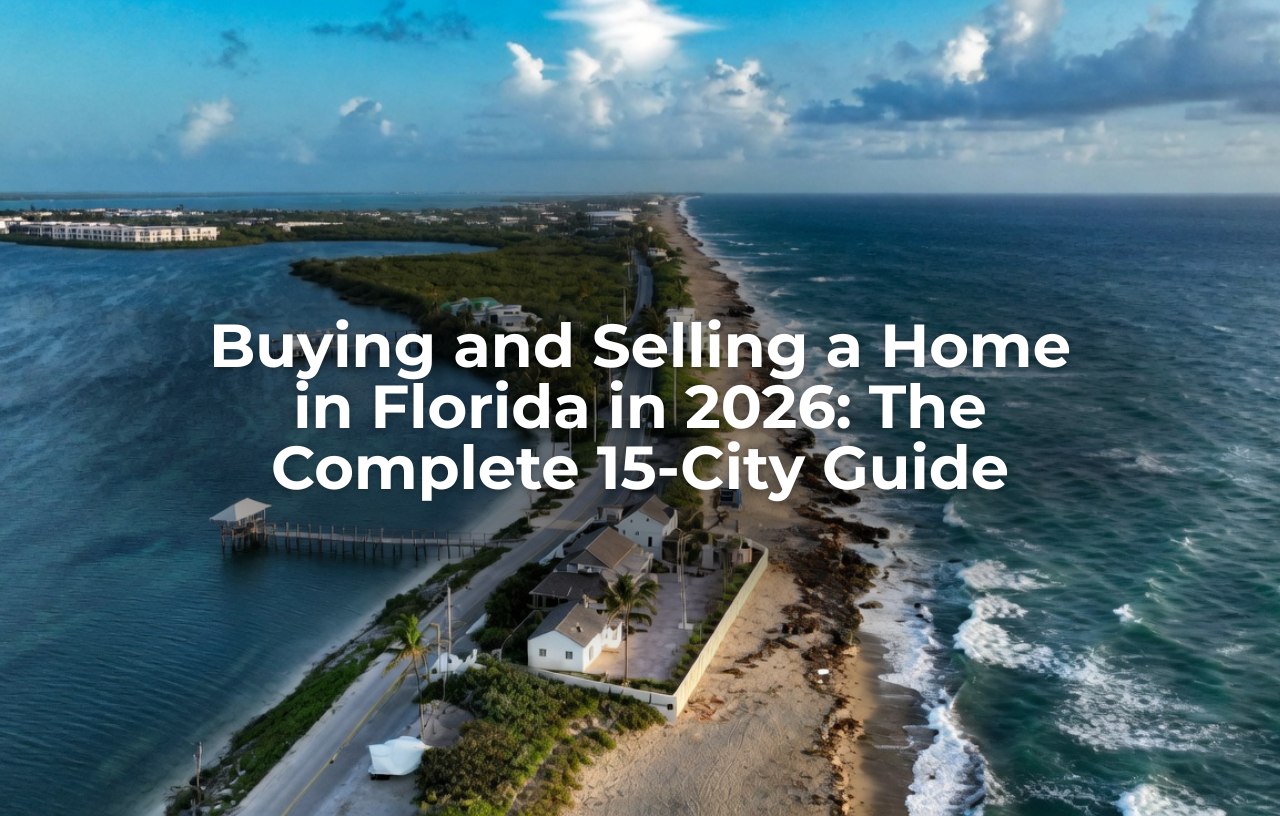
Buying and Selling a Home in Florida in 2026: The Complete 15-City Guide
Whether you’re buying your first home in Port St. Lucie or selling a waterfront in Stuart, here’s exactly how the Florida process works in 2026 – contracts, contingencies, CDD fees, homestead, condo SIRS, disclosures, and the local details that decide your outcome across 15 cities.
Ready to buy or sell a home in Port St. Lucie, FL? Jeannie is available 7 days a week, 8 AM-9 PM – in English or Spanish.
Quick answer: how buying and selling work in Florida
Buying in Florida means getting pre-approved, signing the FR/BAR “AS IS” contract, protecting yourself with contingencies (financing, inspection, appraisal), ordering a title search and title insurance, and filing your homestead exemption after closing to activate the Save Our Homes tax cap.
Selling in Florida means pricing correctly from day one, completing your seller disclosures (including the new flood-history disclosure), staging and marketing aggressively, and managing inspections and contingencies through to a clean closing.
Every city below adds its own wrinkle: CDD fees in newer Port St. Lucie communities, condo milestone inspections and SIRS reserve studies on the coast, dock and seawall checks in Stuart and Jupiter, equity-membership costs in Palm Beach Gardens and Boca Raton, and equestrian diligence in Wellington. A local agent ties it all together.
Your guide: Jeannie Jacobson, Top 1% Treasure Coast REALTOR®
This guide is written by a working Florida agent who closes deals on both sides of the table every week – not a national content mill.
I’m Jeannie Jacobson, a Top 1% REALTOR® with RE/MAX Gold based in Port St. Lucie, Florida, serving the Treasure Coast and South Florida. I’ve been recognized as the Treasure Coast’s favorite Realtor with the People’s Choice Award in 2022 and 2023, I’m bilingual in English and Spanish, and I’ve guided first-time buyers, move-up families, investors, and out-of-state and Canadian clients through every step of buying and selling Florida real estate. For financing, I work closely with Matt Weaver at CrossCountry Mortgage – the #1 mortgage originator in Florida since 2020 and the #1 originator of the Florida Hometown Heroes program for St. Lucie, Palm Beach, and Broward counties.
My promise on both sides is the same: clear knowledge of today’s market, aggressive sourcing or marketing, structured negotiation that wins, and a closing process where nothing falls through the cracks. This master guide combines everything a Florida buyer and a Florida seller needs to know in 2026, then breaks it down city by city for all 15 markets I serve.
Part 1 – How buying a home in Florida works in 2026
A plain-English tour of the rules and paperwork you’ll meet on the way to the closing table. Knowing it up front is exactly what keeps a deal calm.
1. Get pre-approved before you shop
Pre-approval is step one, not step five. A lender reviews your pay stubs, tax returns, and credit to confirm what you can actually borrow, and a strong pre-approval letter is what makes a seller take your offer seriously. Our lending partner, Matt Weaver at CrossCountry Mortgage, often turns around same-day pre-approvals in as little as four to eight hours when documents come in quickly – and that speed is a real advantage when the right home hits the market. Pre-approval also tells us which programs you qualify for, including down-payment assistance, Florida Hometown Heroes, and zero-down options for eligible buyers.
2. The contract, the contingencies, and your deposit
Most Florida purchases run on the FR/BAR contract (the standard Florida Realtors/Florida Bar form), frequently in its “AS IS” version. “AS IS” doesn’t mean “no inspection” – it means you keep the right to inspect and to walk away during the inspection period and recover your earnest money deposit. Your protection lives in the contingencies: a financing contingency tied to your loan, an inspection contingency so you can vet the property, and an appraisal contingency so you’re not forced to overpay if the home doesn’t appraise. A local agent structures those clauses so you stay protected without looking weak against competing offers.
3. Disclosures the seller owes you
Under Florida’s longstanding Johnson v. Davis duty, a seller must disclose facts that materially affect the property’s value and aren’t readily observable. As of October 1, 2024, sellers also provide a flood-history disclosure – whether the home has flooded and whether they’ve filed flood-insurance claims. Homes built before 1978 trigger a federal lead-based-paint disclosure, and many properties also carry well and septic disclosures. Read every one carefully; they shape your inspection priorities.
4. Title, survey, and closing costs
A title search confirms the seller can legally convey the property and surfaces liens, easements, or boundary issues; title insurance then protects you against claims that slipped through. Expect a survey, lender fees, prepaid insurance and taxes, and your share of documentary stamp tax and recording costs at closing. Florida buyers financing a purchase also pay doc stamps and intangible tax on the mortgage. We provide a written estimate early so there are no surprises.
5. HOA, CDD, condos, and insurance
If you’re buying in a community, request the HOA estoppel and governing documents and read the rules before your inspection period ends. Newer master-planned neighborhoods often carry a separate CDD (Community Development District) fee on the tax bill – it is not the same as HOA dues. Condo buyers should review the association’s milestone inspection status and Structural Integrity Reserve Study (SIRS) – the post-Surfside reserve rules that affect assessments and lending. Because Florida’s property-insurance market is its own animal, a current wind-mitigation and four-point inspection can meaningfully lower your premium.
6. After you close: homestead & Save Our Homes
Once the home is your primary residence, file for the Florida homestead exemption with the county property appraiser. It reduces your taxable value and activates the Save Our Homes cap, which limits how fast your assessed value can rise year to year. Buying as a non-resident or foreign national? Then FIRPTA withholding and your tax situation deserve a conversation with your CPA before you write the offer.
7. Buyer representation in 2026
Following the 2024 national settlement, buyers now typically sign a written buyer-broker agreement spelling out how your agent is paid before touring homes. It’s a good change – it puts everything in writing and makes sure someone is genuinely on your side of the table.
Part 2 – How selling a home in Florida works in 2026
Selling is part strategy, part paperwork. Here’s the sequence that gets Florida sellers top dollar with the fewest surprises.
1. Price it right from day one
The single biggest lever a seller controls is price. Overpricing in 2026 leads to stale days-on-market, low-ball offers, and eventual reductions that net less than a confident, comparables-based list price would have. I price using current local sold data – not last year’s peak and not a guess – and we adjust strategy as showings and feedback come in. If your home isn’t moving, builder-style incentives (rate buydowns, closing-cost credits) can be more effective than another price cut.
2. Prepare, stage, and market aggressively
Presentation drives both speed and price. Decluttering, light staging, professional photography, and targeted online marketing put your home in front of the right buyers fast. The goal is to create competition – and in many of these markets, a well-prepared listing draws multiple offers in days.
3. Your seller disclosures
As a Florida seller you carry the Johnson v. Davis duty to disclose known material defects, the October 1, 2024 flood-history disclosure, and – for pre-1978 homes – the federal lead-based-paint disclosure. Many sellers also complete a property disclosure covering systems, roof, and any prior repairs. Honest, complete disclosure protects you legally and keeps deals from collapsing during the buyer’s inspection period.
4. The contract, contingencies, and timeline
When offers arrive, we evaluate them on the FR/BAR contract not just on price but on the buyer’s financing strength, contingency timelines, and deposit. A clean offer with a solid pre-approval and reasonable inspection windows often beats a higher offer that’s likely to fall apart. I manage the milestones – inspection, appraisal, title, and closing – so the transaction stays on schedule.
5. Title, payoff, and net proceeds
On the sell side, the title search confirms clear title and surfaces any liens or judgments that must be cleared before closing. We coordinate your mortgage payoff, prorate taxes, and account for the seller’s customary closing costs – including documentary stamp tax on the deed in most counties. I give you a written net-proceeds estimate up front so you know what you’ll walk away with.
6. Special situations: condos, relocation, and 1031
Selling a condo? Be ready for buyers to scrutinize the milestone inspection and SIRS reserve study – a well-funded association sells faster. Relocating out of state or abroad? I coordinate the Florida sale and connect you with a vetted agent on the other end. Selling an investment property? A 1031 exchange may defer capital-gains tax if you reinvest – talk to your CPA early, because the timelines are strict.
1. Port St. Lucie: Buying & Selling
Treasure Coast – First-time-buyer country
Port St. Lucie is where I spend most of my days, and it’s one of the most active two-sided markets in South Florida – strong, steady buyer demand meets a city that keeps building. The defining local feature for both buyers and sellers is the CDD (Community Development District). Newer neighborhoods like Tradition and the corridors off Becker and Crosstown often carry a CDD line on the tax bill that funds roads, lakes, and amenities – separate from HOA dues.
Buying What to plan for
Confirm the exact CDD balance and HOA dues before your inspection period closes so the true monthly cost is clear. Because so much inventory is newer, builder contracts can differ from the standard FR/BAR “AS IS” form – read them so your inspection and financing contingencies aren’t quietly stripped. Port St. Lucie is prime territory for down-payment assistance and Hometown Heroes, and a strong pre-approval often gets a first-timer to the table.
Selling What gets you top dollar
With consistent demand, well-prepared Port St. Lucie homes often sell quickly – but pricing still matters. Buyers compare your home against new construction down the road, so staging and condition decide whether you win the comparison. Be ready to disclose your CDD status clearly; surprises there cost deals. If your listing stalls, an interest-rate buydown credit can be more powerful than a price cut.
Buying or selling in Port St. Lucie? Call Jeannie to build your plan – 7 days a week, 8 AM-9 PM.
2. Western Port St. Lucie & Tradition: Buying & Selling
Master-planned growth corridor
The western side of Port St. Lucie behaves like its own market – the newest construction, town centers, and amenity-rich communities, almost all carrying CDD assessments. That changes the math on both sides of the deal.
Buying New-construction details
Builder incentives can be generous but are usually tied to a preferred lender – fine, as long as we protect your appraisal and financing contingencies and you understand the warranty. A new home still needs a builder’s-warranty walkthrough and an independent inspection. File your homestead exemption immediately so the Save Our Homes cap starts protecting you from the rapid assessment increases this fast-growing zone tends to see.
Selling Competing with the builder next door
The biggest challenge for resale sellers out here is the builder across the street offering incentives. The winning strategy is to highlight what a resale offers that new construction doesn’t – mature landscaping, upgrades already installed, established CDD pay-down, and immediate move-in. Pricing against both resale comps and builder base prices is essential, and that’s where local data earns its keep. See what’s selling in Tradition.
Let’s talk about your move on the Treasure Coast. Reach Jeannie directly to get started today.
3. St. Lucie County: Buying & Selling
The wider county view
Zoom out from the city limits and St. Lucie County opens up everything from in-town homes to semi-rural acreage where you can keep the boat, RV, or horses. That variety is the appeal – and it changes the homework on both sides.
Buying Rural diligence
On larger parcels you’re more likely on well and septic, so a well-water test and septic inspection belong in your inspection period alongside the standard four-point and wind-mitigation reports. The survey and title search do real work here – confirming boundaries, easements, and any agricultural classification that affects taxes.
Selling Pricing the unique parcel
Acreage and rural homes are harder to price because true comparables are scarce – every parcel is a little different. I market the lifestyle (space, privacy, flexibility) to the right buyer pool and set price using the closest genuine comps plus land value. Having well, septic, and survey documents ready up front speeds the buyer’s diligence and protects your timeline. Selling acreage in St. Lucie County?
Questions about a county home – buying or selling? Call Jeannie now, English or Spanish.
4. Fort Pierce: Buying & Selling
Historic core – Waterfront & marina
Fort Pierce has real character – a working waterfront, a revitalizing downtown, and pockets of historic homes you can’t find in the newer suburbs. Water is the wildcard on both sides of every deal here.
Buying Older homes, real value
Older construction means a lead-based-paint disclosure on anything pre-1978, an honest inspection of roof, electrical, and plumbing, and a careful read of the Johnson v. Davis disclosures. Near the lagoon and marina, flood zone matters enormously – pull the FEMA designation, budget flood insurance, and read the flood-history disclosure. A wind-mitigation report is non-negotiable for insurance pricing.
Selling Disclose water and lead honestly
Fort Pierce sellers win by getting ahead of the two issues buyers worry about most: flood history and the age of major systems. A clean, complete flood-history disclosure and any recent roof or system updates documented up front keep buyers confident and offers strong. With downtown’s continued revival, well-presented historic homes can command attention from buyers priced out of glossier markets. What’s your Fort Pierce home worth?
Buying or selling in Fort Pierce, FL? Reach Jeannie directly – she responds within minutes.
5. Jensen Beach: Buying & Selling
Beaches – Riverfront – Walkable pockets
Jensen Beach is the lifestyle pick – close to beaches, riverfront parks, and walkable districts. Much of the desirable inventory is condo and townhome product near the water, which puts the condo-reserve question front and center.
Buying Read the association first
For any condo, request the milestone inspection status and Structural Integrity Reserve Study (SIRS) – they tell you whether a special assessment is coming and whether lenders will finance the building. Then review the estoppel, budget, rental restrictions, and pet rules during your inspection window. On single-family homes near the water, keep the flood-zone check and wind-mitigation report on the list.
Selling A funded association sells faster
If you’re selling a Jensen Beach condo, the health of your association’s reserves is now part of your sales pitch. A building with a completed milestone inspection and a funded SIRS sells faster and at a stronger price than one facing a looming assessment. Have those documents organized and ready; buyers (and their lenders) will ask. Selling a coastal condo?
Buying or selling a Jensen Beach condo? Call Jeannie to review reserves and strategy.
6. Stuart: Buying & Selling
Riverfront – Historic downtown – Boating
Stuart is the “Sailfish Capital,” and if boating is part of the dream, this is the market to understand carefully. Waterfront and canal homes come with docks, seawalls, and riparian rights that drive value on both sides.
Buying Inspect the water assets
Examine the dock, seawall, and dredging history and confirm everything was permitted during your inspection period. A failing seawall or unpermitted dock can be an expensive surprise. Downtown’s historic homes may sit in overlay districts with renovation guidelines. On the water, flood zone and the flood-history disclosure drive insurance, and the title search confirms shared-waterway easements.
Selling Document the dock and seawall
Waterfront Stuart sellers should gather dock permits, seawall records, and any recent marine improvements before listing – these are exactly what serious boating buyers scrutinize, and having them ready prevents renegotiation. Highlighting water depth, dock specs, and direct access can justify a premium. With limited true waterfront inventory, well-prepared listings here are often hotly contested. Value your Stuart waterfront.
Buying or selling a Stuart waterfront? Call Jeannie – she’ll handle the dock and seawall details.
7. Palm City: Buying & Selling
Family-friendly – Golf & river access
Palm City is the family favorite – strong schools, golf communities, and quiet river-access neighborhoods. Much of the inventory sits inside gated and golf HOAs, so the association documents are central on both sides.
Buying Schools, lots, and the long view
Read the HOA estoppel for rental rules, architectural-review requirements, reserve health, and any pending special assessments before your contingency deadlines. Verify school zoning directly rather than trusting a listing remark. On river-access and larger lots, check the survey and any well/septic components plus the standard insurance reports.
Selling Lead with the school zone
Palm City’s school reputation is a genuine selling asset – confirm and feature the exact zoning, because families search for it specifically. Homes in well-run golf communities sell on amenities and lifestyle, so present the community as much as the house. Stable demand and limited turnover mean correctly priced Palm City listings tend to move well. List your Palm City home.
Moving to or from Palm City? Call Jeannie to confirm school zones and your options.
8. Vero Beach: Buying & Selling
Barrier island – Riverfront – Quiet inland
Vero Beach offers three different worlds in one area: barrier-island condos, riverfront neighborhoods along the lagoon, and quiet inland communities at a gentler price. Knowing which one fits – and what it insures for – is the whole game.
Buying Match the home to the budget
On the barrier island, expect higher flood and wind exposure; pull the flood designation, read the flood-history disclosure, and price coverage before committing. Island and oceanfront condos fall squarely under milestone inspection and SIRS rules, so review the reserve study early. Inland Vero offers more conventional buying with lower insurance, and many communities cater to 55+ buyers with their own deed restrictions.
Selling Position for the right buyer pool
Each Vero submarket attracts a different buyer, so marketing must be targeted – island condos to seasonal and second-home buyers, inland homes to year-round residents and families. Island condo sellers should lead with reserve health; inland sellers can compete on insurance affordability. Pricing by submarket, not a blanket “Vero” number, is what closes deals here. Value your Vero Beach home.
Buying or selling in Vero Beach? Call Jeannie to weigh the island, riverfront, and inland markets.
9. Jupiter: Buying & Selling
Beaches – Boating – Golf
Jupiter is one of the most coveted addresses in Palm Beach County – beaches, boating, and golf draw serious demand and a competitive, sometimes multiple-offer environment.
Buying Win without overpaying
A clean, well-structured offer – strong pre-approval, sensible contingency timelines, terms that speak to the seller – beats a higher but messier bid. On waterfront and canal homes, examine docks, seawalls, and dredging history and confirm flood zone. In golf and gated communities, the HOA estoppel, equity-membership requirements, and reserve health carry real dollars. Condos fall under SIRS/milestone rules.
Selling Capitalize on demand
Jupiter sellers often enjoy strong buyer competition, but presentation and pricing still decide whether you get one offer or several. Waterfront sellers should document dock and seawall condition; golf-community sellers should make membership terms clear up front so buyers can act fast. A multiple-offer situation, managed well, can secure not just a high price but clean terms. Sell your Jupiter home.
Buying or selling in Jupiter? Call Jeannie to move decisively in a fast market.
10. Palm Beach Gardens: Buying & Selling
Golf communities – Gated – PGA corridor
Palm Beach Gardens is golf-and-gates country, anchored by the PGA corridor and a long list of country-club communities. The club and HOA documents are as important as the home inspection on both sides.
Buying Do the membership math
Many communities require a mandatory equity or social membership with its own buy-in and dues – a real cost that needs to be in your budget before you write. Pull the HOA estoppel, club terms, reserve study, and any pending special assessments during your inspection window. Standard items apply too: title search, survey, wind-mitigation, and financing/appraisal contingencies.
Selling Make membership terms clear
Sellers in PBG club communities should present membership requirements and dues transparently – buyers self-select fast, and ambiguity slows the sale. Highlighting the club lifestyle, course access, and community amenities is often what justifies the price. A funded reserve and no looming assessment make your listing far easier to sell. Value a PGA-area home.
Buying or selling in Palm Beach Gardens? Call Jeannie to run the club-membership numbers.
11. Wellington: Buying & Selling
Equestrian – Gated communities – Top schools
Wellington is unlike anywhere else – world-class equestrian neighborhoods beside family-friendly gated communities and top-rated schools. The diligence on equestrian and acreage property is its own discipline.
Buying Equestrian diligence
Beyond a normal inspection: well and septic testing, agricultural zoning and tax classification, barn and paddock condition, drainage, and any equestrian-trail or deed restrictions. On larger parcels, the survey and title search carry extra weight. In gated family communities, the HOA estoppel and reserve health drive carrying cost, and school zones should be verified directly.
Selling Market to the equestrian buyer
Selling an equestrian estate means reaching a specialized, often national or international buyer pool – barn specs, ride-out access, and proximity to show grounds are the features that sell. Family-community sellers should lead with schools and amenities. Wellington’s seasonal equestrian calendar also affects timing, and I help sellers list when their buyer is actually in town. List your Wellington property.
Buying or selling an equestrian or family home in Wellington? Call Jeannie today.
12. West Palm Beach: Buying & Selling
Downtown condos – Historic districts – Waterfront
West Palm Beach offers the most urban lifestyle on this list – downtown condos, walkable historic districts, and waterfront near the Intracoastal. The experience splits sharply by product type.
Buying Reserves and historic rules
For downtown and waterfront condos, the most important 2026 task is the milestone inspection and SIRS review – read the reserve study and assessment history and confirm the building is warrantable for financing. In historic districts (Flamingo Park, El Cid), homes may sit in overlay zones, and pre-1978 construction triggers the lead-based-paint disclosure. Waterfront brings flood-zone considerations.
Selling Reserve health is your headline
For West Palm condo sellers, the building’s reserve status now directly affects salability and price – a funded SIRS and clean milestone inspection are selling points worth featuring. Historic-district sellers can lean into character and walkability, which command a premium. Pricing by building and by district, not a citywide average, is essential. Value your West Palm home.
Buying or selling a West Palm Beach condo? Call Jeannie to review the building’s reserves.
13. Boca Raton: Buying & Selling
Premium South Florida living
Boca Raton sits at the high end – prestigious gated communities, country clubs, and a deep pool of well-qualified, often cash, buyers. That backdrop shapes strategy on both sides.
Buying Compete with cash, smartly
A fast, strong pre-approval and a clean offer routinely beat a higher but messier bid. Many club communities carry mandatory membership requirements, so factor buy-in and dues alongside HOA costs. Pull the estoppel, reserve study, and any special assessments; in established condos the milestone/SIRS picture is essential. Coastal properties bring flood and wind into the math.
Selling Present to a discerning buyer
Boca buyers expect polish, so professional staging, photography, and presentation are not optional – they set the price ceiling. Club-community sellers should make membership terms clear, and condo sellers should lead with reserve health. With strong demand at the top end, a correctly positioned Boca listing can attract multiple, often cash, offers. Sell your Boca Raton home.
Buying or selling in Boca Raton? Call Jeannie for a winning, polished strategy.
14. Boynton Beach: Buying & Selling
Coastal value – Marina – 55+ communities
Boynton Beach has become one of the better value stories in Palm Beach County – coastal neighborhoods, marina-side condos, and a strong selection of 55+ communities at prices that undercut its glossier neighbors.
Buying Read the covenants
In active-adult communities, read the age-restriction deed covenants and HOA rules carefully – they’re binding. Marina and waterfront condos fall under milestone/SIRS rules, so the reserve study comes first. Confirm the flood zone, read the flood-history disclosure, and budget wind and flood insurance. Strong year-round rental demand makes Boynton worth a look for investors too.
Selling Sell to the right buyer
55+ sellers reach a specific buyer pool, and marketing should speak to that lifestyle – low-maintenance living, amenities, and community. Condo sellers benefit from a funded reserve. Boynton’s value positioning also draws investors and first-time buyers priced out of Boca and Delray, which widens your pool of potential offers. Value your Boynton home.
Buying or selling in Boynton Beach? Call Jeannie – available 7 days a week, 8 AM-9 PM.
15. Delray Beach: Buying & Selling
Walkable Atlantic Ave – Beachside – Arts
Delray Beach is the walkable, arts-and-dining favorite – homes near Atlantic Avenue, beachside cottages, and modern condos all command a premium because the lifestyle is so easy to love.
Buying Cottages, condos, rental rules
Older beachside cottages can be charming but trigger the lead-based-paint disclosure (pre-1978) and deserve a thorough inspection; some sit in historic overlays. Modern condos get the milestone/SIRS reserve review. If buying for seasonal rental income, read the HOA and any municipal short-term-rental rules – they vary block by block. Near the beach, confirm flood zone and insurance.
Selling Sell the walkable lifestyle
Delray’s walkability and Atlantic Avenue energy are the headline – proximity to dining, arts, and beach is what buyers pay for, so market the location as hard as the home. Sellers with legal short-term-rental history can attract investor buyers. Given strong demand, a well-prepared, correctly priced Delray listing tends to move quickly and competitively. Sell your Delray Beach home.
Buying or selling in Delray Beach, FL? Call Jeannie now – English or Spanish.
Why a local agent matters – on both sides
Anyone can scroll listings or stick a sign in the yard. The value is in knowing which home is positioned for negotiation, which association is heading for an assessment, how to price for top dollar, and how to write or evaluate an offer that actually closes.
For buyers, my four promises are knowledge of what the market is really doing, sourcing the right home (including off-market and motivated-seller situations), negotiating with a structured offer method that wins in multiple-offer fights, and closing – driving inspections and contingencies so nothing slips. For sellers, it’s accurate pricing, aggressive preparation and marketing, skilled negotiation of offers and terms, and the same disciplined closing management. I’m a Top 1% REALTOR®, a two-time People’s Choice Award winner (2022 and 2023), and bilingual in English and Spanish, and I treat every transaction like it’s the only one on my desk.
The Matt Weaver / CrossCountry advantage for buyers
I work closely with Matt Weaver at CrossCountry Mortgage – the #1 mortgage originator in Florida since 2020 and the #1 originator of the Florida Hometown Heroes program for St. Lucie, Palm Beach, and Broward counties. His team often delivers same-day pre-approvals and operates seven days a week, the kind of speed that wins homes in competitive markets. CrossCountry Mortgage is an independent lender; you are never required to use any particular lender, and any referral relationship is disclosed in writing.
Ready to buy, sell, or both?
Tell me your goals – your budget, your timeline, and the cities you’re weighing – and I’ll build you a plan from first conversation to closing.
Florida buying & selling FAQ
The questions buyers and sellers ask me most – statewide fundamentals first, then by city. Built to answer real questions directly for search and AI engines.
Florida fundamentals (buy & sell)
What is the FR/BAR “AS IS” contract in Florida?
It’s the standard Florida Realtors/Florida Bar purchase agreement. The “AS IS” version lets the buyer inspect and cancel during the inspection period for any reason and recover the earnest money deposit, while the seller is not obligated to make repairs. It does not waive the seller’s duty to disclose known material defects.
What are CDD fees, and are they the same as HOA dues?
No. A CDD (Community Development District) fee funds infrastructure like roads, lakes, and amenities in newer master-planned communities and appears on the annual property-tax bill. HOA dues fund community operations and are billed separately. Many newer Port St. Lucie and Tradition communities carry both – confirm the CDD amount before closing.
What is the homestead exemption and Save Our Homes cap?
After a home becomes your primary residence, filing for the Florida homestead exemption with the county property appraiser reduces taxable value and activates the Save Our Homes cap, which limits how fast your assessed value can increase each year.
What is a SIRS and why does it matter for condos?
A Structural Integrity Reserve Study (SIRS) is a post-Surfside reserve requirement for many Florida condo associations. Along with the milestone inspection, it indicates whether special assessments are likely and whether lenders will finance units. It matters to both buyers (cost and financing) and sellers (a funded reserve sells faster).
What does Florida’s flood-history disclosure require?
As of October 1, 2024, sellers must disclose the property’s flood history, including whether it has flooded and whether flood-insurance claims have been filed. Buyers should read it closely and confirm the FEMA flood zone, especially near the coast.
Do I need a buyer-broker agreement to buy in 2026?
Following the 2024 national settlement, buyers typically sign a written buyer-broker agreement spelling out how their agent is compensated before touring homes. It puts representation in writing and ensures the agent works on the buyer’s behalf.
How do I sell my house fast in Florida?
Price it correctly from day one using current local comparables, prepare and stage the home, market it aggressively, complete your disclosures, and use the FR/BAR contract with clear timelines. A local listing agent coordinates inspections, appraisal, title, and closing to keep the sale on schedule.
What are typical closing costs for Florida buyers and sellers?
Buyers typically pay lender fees, title insurance (varies by county custom), survey, prepaid taxes and insurance, and doc stamps/intangible tax on the mortgage. Sellers typically pay documentary stamp tax on the deed, their share of title costs (by county custom), and mortgage payoff. I provide written buyer cost and seller net-proceeds estimates up front. This is general information, not legal or tax advice.
Port St. Lucie & Western Port St. Lucie
What are property taxes like in Port St. Lucie?
St. Lucie County applies its millage rate to assessed value, and your bill depends heavily on filing the homestead exemption, which activates the Save Our Homes cap. In newer communities the tax bill may also include a separate CDD assessment. I provide a written tax-plus-CDD estimate for any home.
Do I have to pay CDD fees in Port St. Lucie, and how much?
Only in communities with a Community Development District – common in Tradition and many western neighborhoods. Amounts vary by community and by how much of the bond is paid down. I pull the exact CDD balance and annual amount on every home.
Are there first-time buyer or zero-down programs in Port St. Lucie?
Yes – it’s one of the better markets for it. Buyers frequently use down-payment assistance, Florida Hometown Heroes (if eligible), and zero-down loans. A fast pre-approval tells us which programs you qualify for.
How fast do homes sell in Port St. Lucie right now?
Well-prepared, correctly priced homes tend to move quickly thanks to steady demand, but buyers compare resales against nearby new construction, so condition and pricing decide your speed. I price using current local sold data and adjust strategy based on showings and feedback.
St. Lucie County
Are HOAs common across St. Lucie County?
It depends where you buy. In-town and master-planned communities usually have an HOA (and sometimes a CDD); rural and acreage parcels often have none. I review the HOA estoppel and any deed restrictions for every community home.
I’m looking at acreage with well and septic – what should I check?
Add a well-water test and a septic inspection to your inspection period, and confirm the survey shows boundaries and access easements. Check zoning and any agricultural tax classification. These are routine on rural parcels.
How do I price unique acreage when there are few comps?
I use the closest genuine comparables plus land value and market the lifestyle to the right buyer pool. Having well, septic, and survey documents ready up front speeds the buyer’s diligence and protects your timeline.
Fort Pierce
Is flood insurance required in Fort Pierce?
If the home is in a FEMA flood zone and you’re financing, your lender will require it – and near the lagoon or marina, many homes are. I pull the flood designation early and have you read the seller’s flood-history disclosure so premiums are in your budget from the start.
Are Fort Pierce’s historic homes a good buy?
They can be a strong value, but older construction means a careful inspection of roof, electrical, and plumbing, a lead-based-paint disclosure on anything pre-1978, and a check for historic-overlay rules.
How do I sell an older Fort Pierce home confidently?
Get ahead of the two buyer worries – flood history and the age of major systems. A complete flood-history disclosure plus documented roof or system updates keeps offers strong and prevents renegotiation during inspection.
Jensen Beach
What should I check before buying a Jensen Beach condo?
The association’s milestone inspection status and SIRS reserve study first – they show whether a special assessment is likely and whether the building is financeable – then the estoppel, budget, rental rules, and pet policy.
Does my condo’s reserve status affect how fast it sells?
Yes. A building with a completed milestone inspection and a funded SIRS sells faster and at a stronger price than one facing a looming assessment. Have those documents organized before listing.
Stuart
I want a waterfront home in Stuart with a dock – what’s involved?
We inspect the dock, seawall, and dredging history, confirm permits, and check HOA dockage rules and the survey for riparian/access rights. On the water, flood zone and a wind-mitigation report drive insurance.
How do I sell a Stuart waterfront for top dollar?
Gather dock permits, seawall records, and recent marine improvements before listing – serious boating buyers scrutinize these, and having them ready prevents renegotiation. Highlight water depth, dock specs, and direct access to justify a premium.
Are taxes different in Stuart versus Port St. Lucie?
Yes – Stuart is in Martin County with a different millage rate than St. Lucie. Your bill still hinges on assessed value and the homestead exemption.
Palm City
Are HOAs common in Palm City, and what do they cost?
Very common – most buyers are in gated or golf-community HOAs. Dues vary, and golf communities can carry larger reserves and occasional special assessments, so I review the estoppel and reserve study before contingency deadlines.
How do I confirm school zoning in Palm City?
I verify school boundaries directly with the district for the exact address rather than relying on a listing remark, since zoning can change. Sellers should feature the confirmed zone, because families search for it.
Vero Beach
Is buying on Vero’s barrier island more expensive to insure?
Generally yes – higher flood and wind exposure. I pull the flood designation, have you read the flood-history disclosure, and price coverage before you commit. Inland Vero typically insures for less.
How should I price a Vero Beach home across three submarkets?
By submarket, not a blanket “Vero” number. Island condos appeal to seasonal buyers, inland homes to year-round residents and families, and each carries different comps and insurance realities.
Jupiter
Are bidding wars common in Jupiter?
They can be. Winning as a buyer is about a clean, well-structured offer rather than simply overpaying. As a seller, presentation and pricing decide whether you get one offer or several.
What do golf-community HOAs in Jupiter cost?
It varies, and some require an equity or social membership with its own buy-in and dues on top of HOA fees. I read the estoppel and membership terms so the full monthly number is clear.
Palm Beach Gardens
Do I have to join the country club to buy in some PBG communities?
In many, yes – a mandatory equity or social membership with a buy-in and monthly dues. I confirm membership requirements and dues before you make an offer so the full cost is clear.
How do I sell faster in a PBG club community?
Present membership requirements and dues transparently so buyers self-select quickly, and feature the club lifestyle and amenities. A funded reserve and no looming assessment make the listing far easier to sell.
Wellington
What’s different about buying an equestrian property in Wellington?
Beyond a normal inspection: well and septic testing, barn/paddock condition and drainage, agricultural zoning and tax classification, and a survey confirming acreage and trail/easement access.
How do I sell an equestrian estate in Wellington?
Market to a specialized, often national or international buyer pool – barn specs, ride-out access, and proximity to show grounds sell the property. Timing around the seasonal equestrian calendar matters too.
West Palm Beach
How risky are downtown West Palm condos with the new reserve rules?
It depends on the building. The milestone inspection and SIRS reserve study reveal whether an assessment is coming and whether the building is warrantable for financing. Review them before your contingency deadlines.
Does reserve health affect selling a West Palm condo?
Yes – directly. A funded SIRS and clean milestone inspection are selling points worth featuring; an underfunded building sells slower and for less.
Can I renovate a historic-district home in West Palm Beach?
Often yes, but homes in districts like Flamingo Park or El Cid may have renovation guidelines, and pre-1978 construction triggers a lead-based-paint disclosure. I flag overlay rules during the inspection period.
Boca Raton
Can a financed buyer compete with cash buyers in Boca?
Yes – a fast, strong pre-approval and a clean offer structure routinely beat a higher but messier bid. Preparation and local guidance level the field in a cash-heavy market.
How do I present a Boca Raton home to sell for top dollar?
Boca buyers expect polish, so professional staging and photography set the price ceiling. Club-community sellers should make membership terms clear, and condo sellers should lead with reserve health.
Boynton Beach
Are 55+ communities a good buy in Boynton Beach?
They can be great value, but read the age-restriction deed covenants and HOA rules carefully – they govern occupancy and use and are binding.
Is Boynton Beach good for investment property?
Its coastal location and strong year-round rental demand make it worth a look for investors. We’d review HOA rental rules, the SIRS on condos, and run the cash-flow numbers. Investment decisions are yours to make; I provide the data, not financial advice.
Delray Beach
What should I know before buying near Atlantic Avenue in Delray?
It’s a competitive, premium pocket, so come pre-approved and decisive. Near downtown and the beach, confirm the flood zone and insurance costs, and on condos review the milestone/SIRS reserve picture.
Can I rent out a Delray Beach home seasonally?
Sometimes – but read the HOA rules and any municipal short-term-rental restrictions before you commit, because they vary block by block. Sellers with legal short-term-rental history can attract investor buyers.
Are Delray’s older beachside cottages worth it?
They have real charm, but expect a lead-based-paint disclosure (pre-1978), a thorough inspection of roof and systems, and possible historic-overlay rules.
A note on Florida disclosures & due diligence
Every Florida purchase carries the seller’s Johnson v. Davis duty to disclose known material defects, the October 1, 2024 flood-history disclosure, and – for pre-1978 homes – a federal lead-based-paint disclosure. Community purchases add the HOA estoppel and governing documents; condos add the milestone inspection and SIRS reserve study; many homes add well/septic disclosures. Buyers’ inspection, financing, and appraisal contingencies exist to provide time to review all of it and walk away with the deposit if something doesn’t add up. Sellers benefit from complete, honest disclosure to keep deals from collapsing. None of this is legal, tax, or financial advice – it’s a roadmap. For your specific situation, consult a Florida real estate attorney, a CPA, an insurance professional, or the relevant county office.
Contact Jeannie Jacobson
Ready to buy or sell a home in Port St. Lucie, FL? Jeannie is available 7 days a week, 8 AM-9 PM, to answer your questions, schedule a viewing, or walk you through your options – in English or Spanish. Call (772) 877-0268 or schedule below and Jeannie will respond within minutes.
Call us: (772) 877-0268
Email: jeanniemjacobson@gmail.com
Office: RE/MAX Gold, 10850 S. US Highway 1, Port St. Lucie, FL 34952 – conveniently situated along the US-1 corridor serving all of St. Lucie County, including Tradition, Torino, River Park, Fort Pierce, and the surrounding Treasure Coast communities.